Baking with Grandma Duck

2 Comments

Baking with Grandma Duck:  Apple Cakenonnapapera

An Italian interpretation of Nonna Papera’s apple pie is translated here below by the wonderful Francine Segan (Dolci: Italy’s Sweets). Francine has been a major fan of  Grandma Duck’s manuale of recipes since childhood, and now she has written a few of her own.  One of her favorites, and certain to be one of yours, is this rich and simple-to-make apple cake.  If you put it on your window sill to cool, attenzione!  It might just disappear.

NOTE:  Click on the sidebar menu under RECIPES for more cooking with Disney!

2011-10-28-DolciCovercrop.jpg

photo by Ellen Silverman

Pareva la torta di Nonna Papera!
Looks like Grandma Duck’s cake!
Said of a particularly pretty cake or pie

A classic! At first glance it may seem like a huge ratio of apple to dough and you’re going to be tempted to cut down on the apples. Don’t! It looks like a lot of apples, but they magically meld into the batter. You’ll love the result. The top half of the cake is chock full of tender apples that float over sweet moist cake.
Deceptively simple, exceptional results.

Ingredients:

2 tablespoons olive oil or butter, plus more for the pan
7 ounces, about 1 1/3 cups, whole wheat or all-purpose flour, plus more for the pan
2/3 cup, plus 1 tablespoon, granulated sugar
2 large eggs or egg substitute
1/2 cup whole milk
2 teaspoons baking powder
1 teaspoon baking soda
Zest of 1 lemon
4 large or 5 medium apples, about 2 pounds total

Preparation
:
Preheat the oven to 350 degrees.
Butter and flour an 8-inch cake pan. Beat 2/3 cup of sugar and the eggs in a large bowl, using a whisk or electric handheld beater, until creamy and light yellow. Beat in the flour, milk, baking powder, baking soda and zest. Pour the mixture into the prepared pan.

Peel and core each of the apples. Dice one of the apples and stir the dices into the batter. Cut the remaining apples into thin slices. Spread the slices over the diced apples in the pan in a neat pattern. Press into the batter. Scatter thin pats of butter or drizzle olive oil over the apples and sprinkle with the remaining tablespoon of sugar. Bake for about 75 minutes, until dark golden and cooked through.

Cooking From Comics: In the Kitchen with Disney Characters

2 Comments

nonna papera4

When Walt Disney was building his Disneyland empire in California in 1955, there was a growing fascination with all things Disney in post-war Europe, and particularly in Italy. Topolino, or Mickey Mouse, hit it big in Italy. By the 1960’s, a lively series of  paperback bound comics  emerged and were extremely popular.  The comics paralleled a fascination with American culture that was taking hold. Today, tees and sweatshirts and all manner of clothing are festooned with Topolino imagery, and a good number of grown men and women don this attire enthusiastically.  In Italy, Disney is not just for kids.

I have a large collection of  the Italian Disney comics, and I never fail to return from Italy without at least 3 or 4 new issues.  I am addicted. I learned a lot of my Italian and a multitude of colorful idioms from these illustrated books. And it turns out that many Italians learned a lot about “American” cooking from their Disney-Italian comic book characters.  You can thank Donald Duck and his extended family.

family

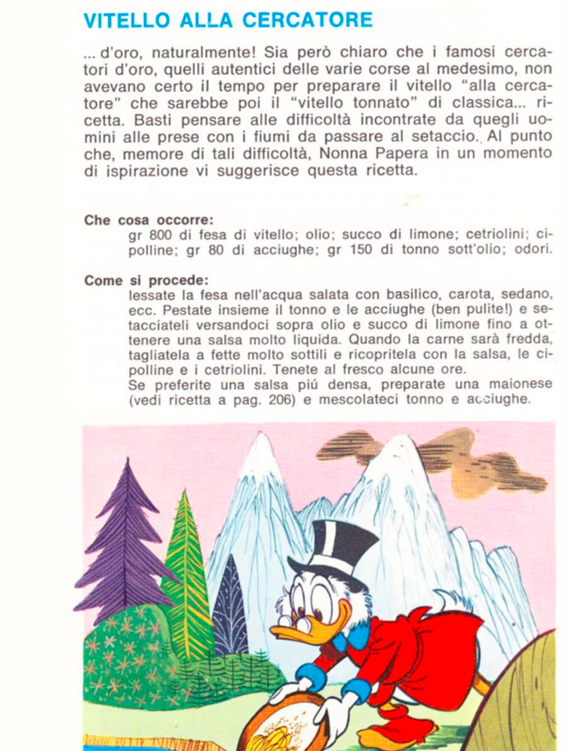
A favorite series featured the adventurous tales of  Uncle Scrooge McDuck (Paperone) along with nephew Donald (Papernik) his three nephews (Qui, Quo, and Qua) and Grandmother Elvira known as Nonna Papera (Grandma Duck).  A rather distorted image of American family life was presented in these comics.  Picnics in the park, gold mining in the Rockies, cowboys wrangling cattle in the west, river rafting down the Mississippi, and trips to outer space were family adventure stories in the comics, all bankrolled by Unca Scrooge himself and in pursuit of some thief who was stealing his treasure chest.

scrooge-mcduck-make-it-rain

Thank goodness for Nonna Papera.  She kept the boys well-fed, the American way. The Italian comic book artists delighted in depicting her beautiful apple pies cooling on her window sill, and even several adventures involved mysteries around who swiped the cooling pastry. Italians  became fascinated with Nona Papera’s beautifully fluted pies–  and her cookies, sandwiches, and picnic fare, too.

images

According to Barks’ and Rosa’s Who’s Who In Duckburg, “Grandma Duck is in many ways the head of the Duck-family. She is normally the one who arranges the family’s Christmas celebrations and she’s known as an excellent cook with pies as one of many specialities.”  It was Donald’s grandmother who made American pie popular in Italy.

grandma

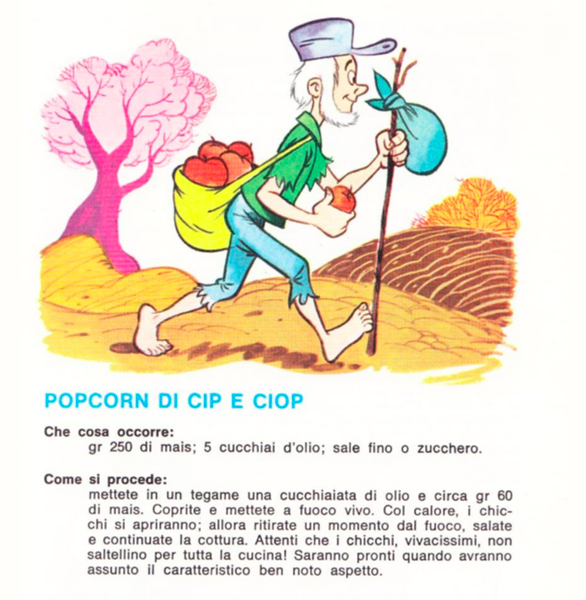
By 1970, a book of her recipes was published under the title Il Manuale di Nonna Papera (The Cookbook of Grandma Duck).  Many  Italian cooks will tell you today that this collection of recipes was their first cookbook and first venture into cooking.   Most of the recipes are an Italian interpretation of American dishes, but in reality, the recipes remain Italian in spirit. Sandwiches (or panini), a Chip and Dale Popcorn recipe, and lots of cakes and pies are included and are featured alongside traditional Italian sweets, finger foods, and several main dishes. Cleverly named, many recipe titles indicate that these are historical recipes handed down to Nonna Papera from very famous people of the past such as Queen Elizabeth or Christopher Columbus (appropriate personages for the settlement of America).

getmedia.php

I’m still reading Disney comic books.  I have recently acquired a reprint of Nonna’s recipe book and have yet to try out these “American” recipes. I am sure if I do, I will no doubt improve not only speaking in Italian but also cooking in Italian.  In time, I might even receive that fine compliment about my cooking from an Italian:  “Pareva la torta di Nonna Papera.” (“That looks just like a cake made by Grandma Duck!”)      –MELorden

NOTE:  Click on the sidebar menu under Recipes for more cooking with Disney!

Screen Shot 2013-01-23 at 6.43.40 PM Screen Shot 2013-01-23 at 6.41.29 PM


For a look at what the current world of Disney is offering in Mickey Mouse and Disney Princess cookbooks, check out these souvenir collections on Amazon:

Available Disney Cookbooks from Amazon.com

41VQ+-rV6LL._AA160_ 51PFCihEjaL._AA160_

Flora’s Fudge

25 Comments

Disney Characters in the Kitchen:  Revisiting A Childhood Recipe

The Fantasy Behind Flora’s Fudge:  Almost As Easy As Magic  (SEE FOLLOW UP NOTE AT BOTTOM OF THIS POST)

I have spent decades yearning for a slice of fudge.  Not just any fudge.  I’ve wanted a hunka hunka burnin’ chocolate nut fudge that I made as a child on a snowy afternoon with my father and sister.  But the recipe was parts unknown, and I only held a faded memory of the comical source of that wondrous fudge recipe.

It was 1959, and I was in a dream world having just seen Disney’s now classic animated film, Sleeping Beauty.  This obsession with medieval castles, a trio of fairy godmothers, and a prince of my own would eventually be eclipsed by a different Disney obsession with Peter Pan, the pirate-loving fella who could fly and preferred to hang out on an island with a team of really cool and furry friends. (I never understood that simpering Wendy.)

At about the same time that I was encountering these Disney role models, I became enamored with cooking with my father.  He loved to cook, and it was obvious in his joy over the stove when he boiled shrimp and stirred cocktail sauce to go with his highballs, much to my mother’s chagrin.  There were his amazing pancakes, eggs, bacon, and all manner of breakfast food.  “I could eat breakfast every meal,” he said.  And sometimes we did.  Having grown up in and around his parents’ bakery and then general store, Daddy was full of food stories about loading and butchering meat, stealing from the pickle barrel, and (my favorite) filling jelly donuts.

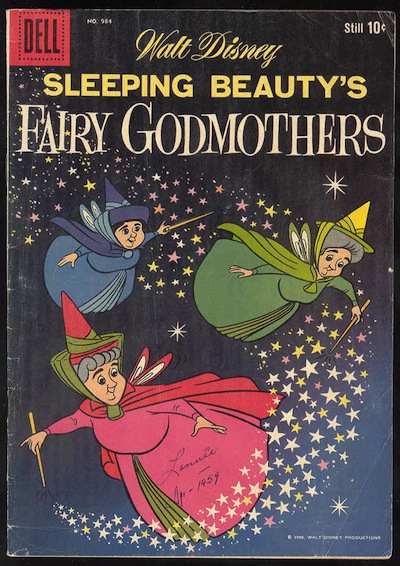
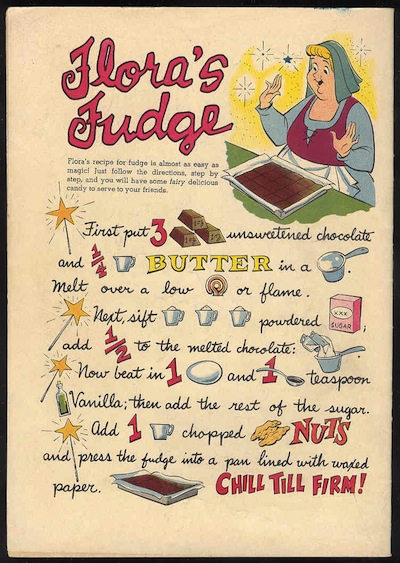
Sunday mornings we picked up the newspaper at the local journal joint on Pleasant Street.  The owner was a big cigar smoker and looked like a villain straight from Marvel comics, which he sold racks of.  I liked looking at the comic books (which oddly were displayed near all the dirty magazines). There, that Sunday, in the more PG of the spinning racks, I saw a shiny comic depicting Sleeping Beauty’s own private team of wish-grantors– those  pink, blue, and green Fairy Godmothers.  This comic book was our Sunday morning treat, and soon my sister and I lapped up all the silly adventures of the winged and glittering Flora, Fauna, and Merryweather.  But the added joy was on the back page of the issue where we discovered a recipe, written in a rebus code, called “Flora’s Fudge.”

4color984fairy-godmothers-f

That afternoon, we convinced our father to create what was sure to be a magical confection in our own kitchen. We decoded the recipe together and followed the directions. It was made in a saucepan, and the comic book image of the pot showed a small saucepan shaped like one we owned. For years, every time we made the fudge, about halfway through the recipe, we transferred the melted base into a mixing bowl to add all the confectioner’s sugar and chopped nuts. Within moments of adding the sugar, and nuts, the fudge became impossible to stir.

Of course, I believed, it never would have been a problem for Flora, the fairy godmother.  All she needed was a flick of her magic wand to transform the ingredients into fabulous fudge. Only our father’s brute force could maneuver the spatula enough to combine the ingredients, and I remember looking forward to and giggling at the funny faces he made in the effort. Our father was great in a pinch.

What follows is the exact recipe for Flora’s Fudge from the vintage comic.  After 50 years of wondering, and a few wild goose chases, I finally tracked down the very comic of my youth on e-Bay. I mistakenly had been hunting for the Sleeping Beauty comic and not The Fairy Godmothers issue. 

Even though I found a posting of the recipe itself on-line, it would not do. I had to have that illustrated rebus in my hands. I had to know if it was really as good and still as hard to stir as I remembered. My imagined solution, then, is to begin with a larger pot to accommodate all the powdered sugar, keep it on the burner at low, and see if this makes a difference in the effort required to combine all the ingredients;

Let’s test my hypothesis.  

4color984fairy-godmothers-b

The Process:

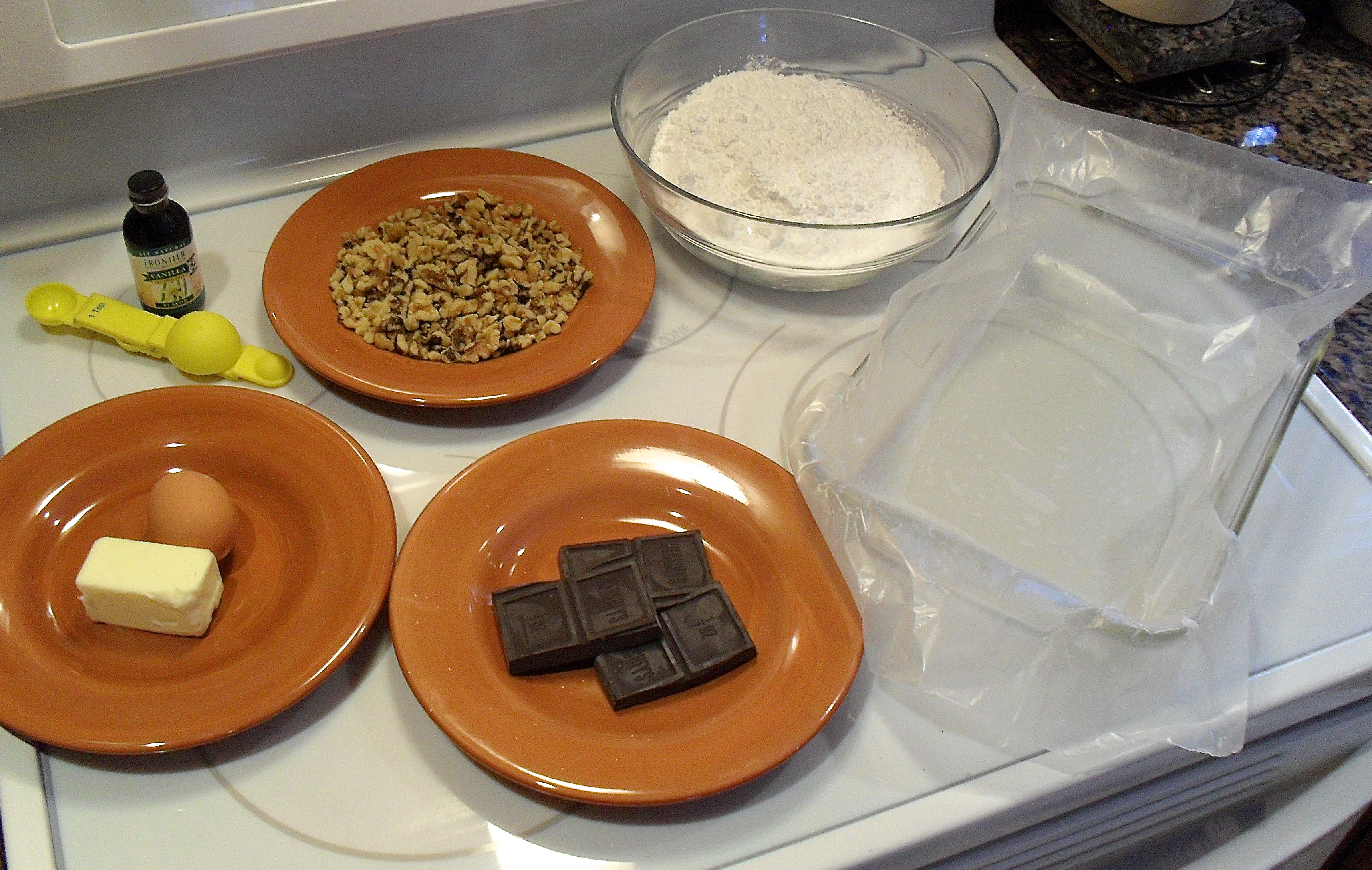
All ingredients assembled. Chocolate selected was 100% Cacao unsweetened chocolate bar by Hershey.

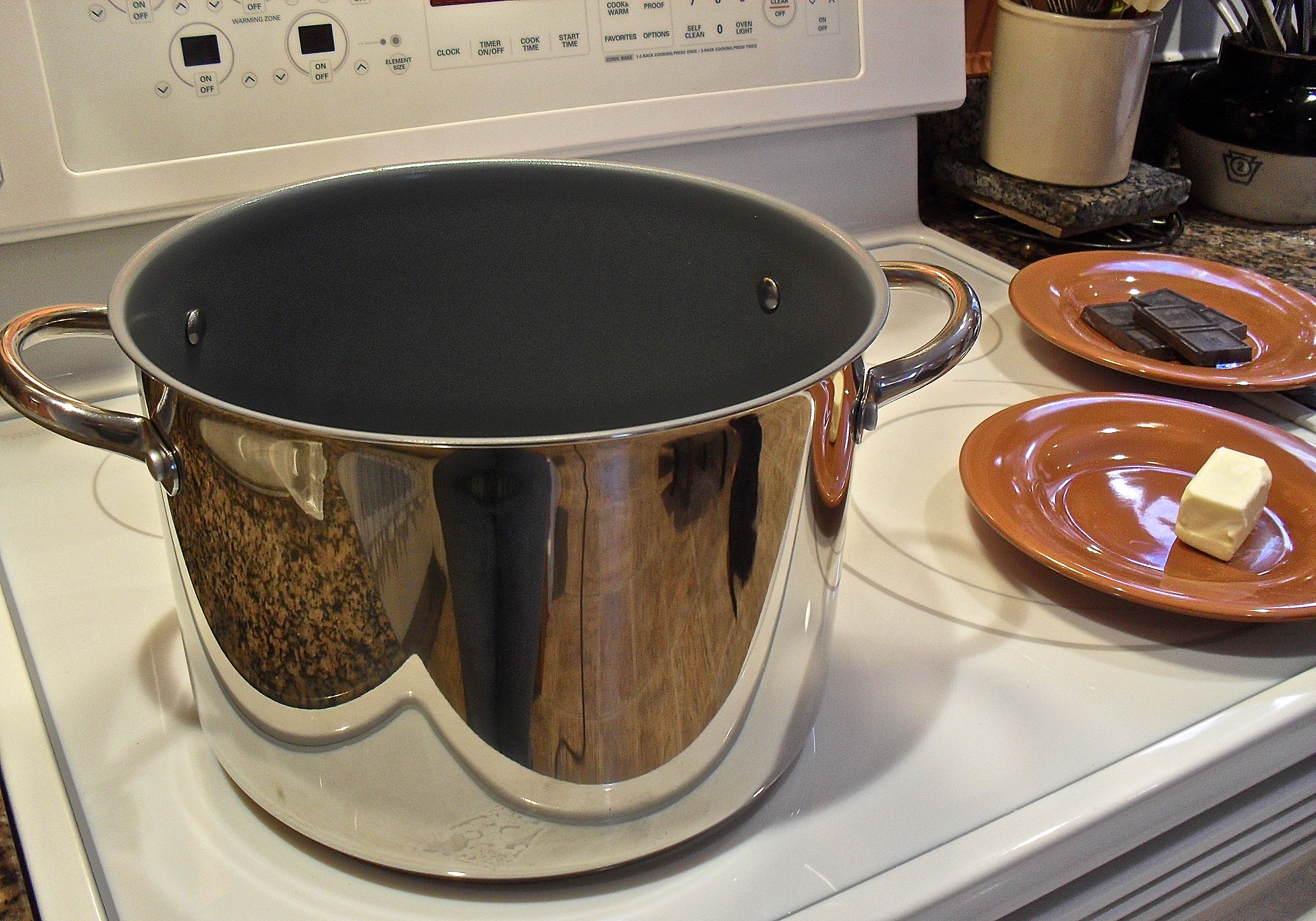
Then I thought that a deep, non-stick  soup pot was a sure bet for handling the large amount of sugar and would prevent any chance of burning. I actually had a roll of wax paper on hand– shades of the fifties when mom wrapped my sandwiches with it for school lunch.

Butter and chocolate melted nicely,  Some panic set in when adding the egg right into the pot– what if it scrambled?  Use a whisk and then spatula and take it off the heat for a moment when adding the egg. Then add vanilla. The liquids kept the mass moving easily.

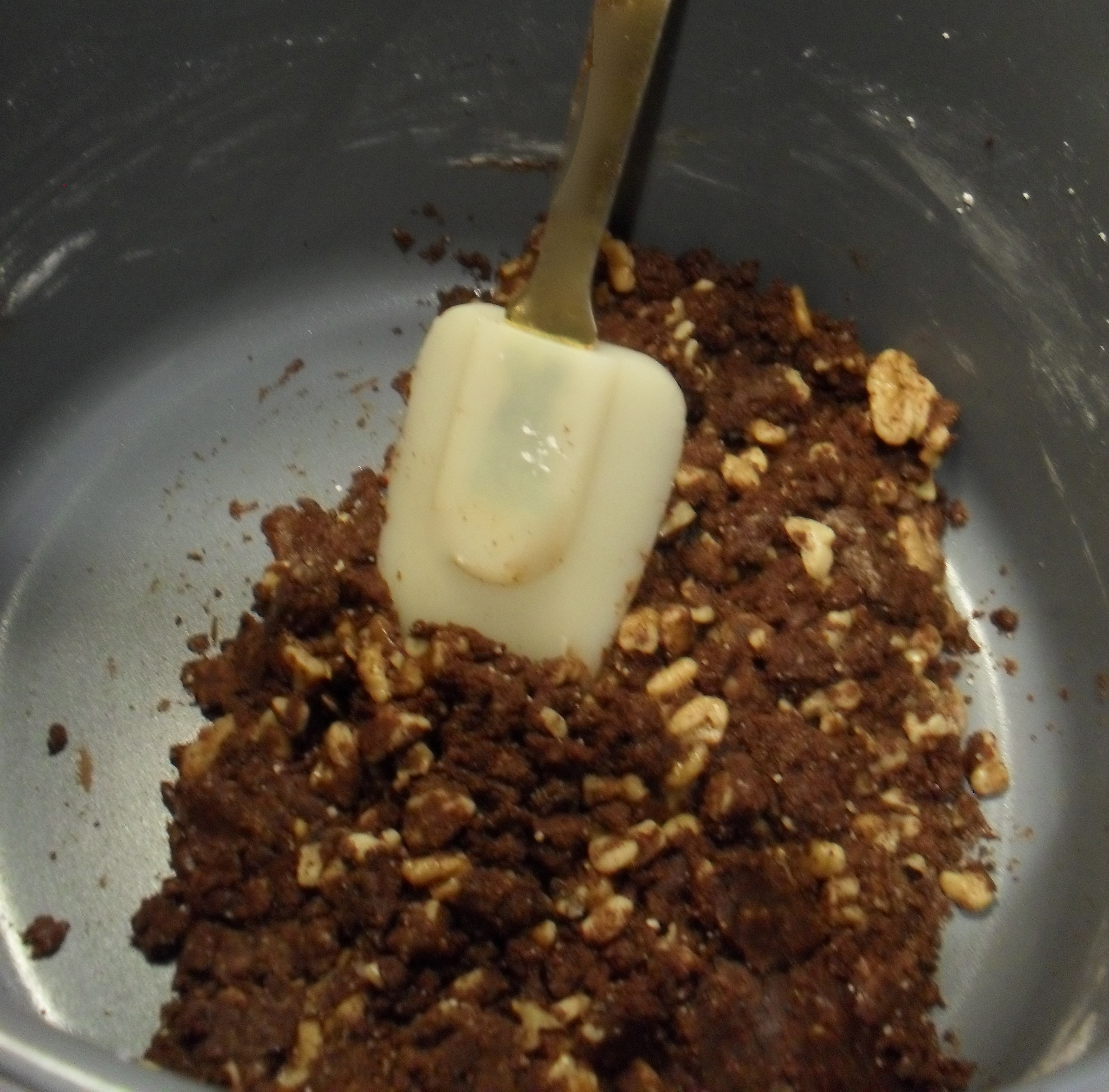
Then it was time for half of the confectioner’s sugar–  things started to seize up and turn to oatmeal consistency.  A continuous mixing seemed to soften the combination, and it accepted the nuts easily.

Adding the second half of the sugar required patient stirring for it to combine , but the stirring was not sticky or stiff as I remember it.  Everything was sliding around the pan nicely…

So it was time to dump it into the glass dish and ready it for the fridge.

It had only a moderate sheen and did not stick to together the way I remembered it. It came out rather grainy.  Why…..?  In retrospect, I made errors:

1)  I am not sure I would use the same unsweetened chocolate I did.  It was Hersheys.  I chose it because it seemed like what we might have used then, but next time I will try Bakers Chocolate.  It just seemed to not have enough fat or cocoa butter in it.

2) I will not use a non-stick pan. I’m going for my mom’s old Revere Ware. The non-stick pot never seemed to heat up correctly on the sides, it was too wide, and it may have created sugar crystals. I beat the fudge before it cooled sufficiently which affected the crystals.

(So, what we did long ago with my father when we transferred the hot mess to a mixing bowl to add the sugar may have been the right step to take in retrospect.)

3)  I think that I stirred the butter too much. It should just melt into the chocolate on its own to avoid separating the water and fat in it.

The fudge tasted fabulous, but the mouth feel was definitely off.  Why don’t some of you give it a try out there?  OTK would love to know how fabulous was your version of Flora’s Fudge?

~~~~~~~~~~~~~~~~~~~~~~~~~~~~~

FOLLOW UP NOTE:

So 24 hours later, I can say that this first attempt at recreating Flora’s Fudge was a FLOP. But I have not given up and will revisit the recipe in the near future.

Readers out there who know about making candy or working with chocolate might offer up some good advice here. It would be appreciated.

And do let me know,  folks,  if you have tried it, too. The recipe is rather thin on directions, but then again, the comic artists at Disney in1959 were probably not chocolatiers– just Mousketeers.

MOUSEKETEERS6

The Mother of All Mixers: The Sunbeam Mixmaster
22 Comments

The Mother of All Mixers: The Sunbeam Mixmaster

img_3034

     In 1950, my mother was a new housewife with no cooking experience but plenty of will to learn.  Rheta had been exiled from her own mother’s kitchen, never taught to cook. On the eve of her wedding, the story goes, my grandmother Lena’s remark to her was: ”You’re so smart? If you can read, you can cook. Go buy a book.”

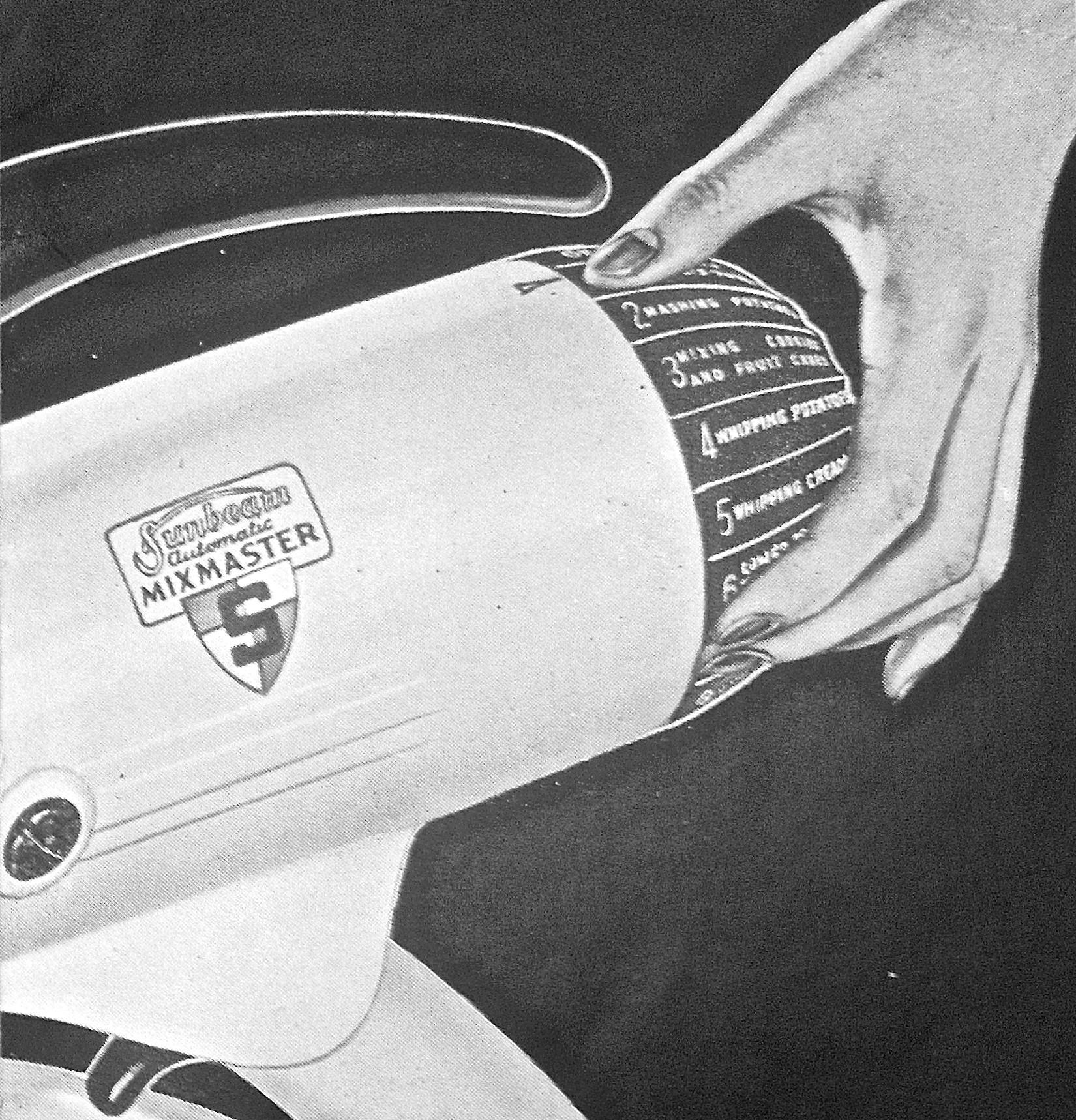
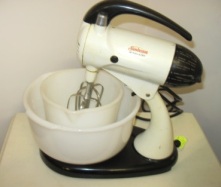
My newlywed mother took her mother’s advice along with a wedding gift from my uncles and aunts–  the hottest, do-it-all appliance of the day–  the Sunbeam Mixmaster. In time, she would set up a tasteful pink and gray formica kitchen with a chubby Frigidaire and a pushbutton GE stove to complete the suite of modern appliances.  Her Mixmaster model was the Cadillac version, complete with all the bells and whistles.  Unfortunately, its bells hardly ever rang, and its whistles rarely blew.

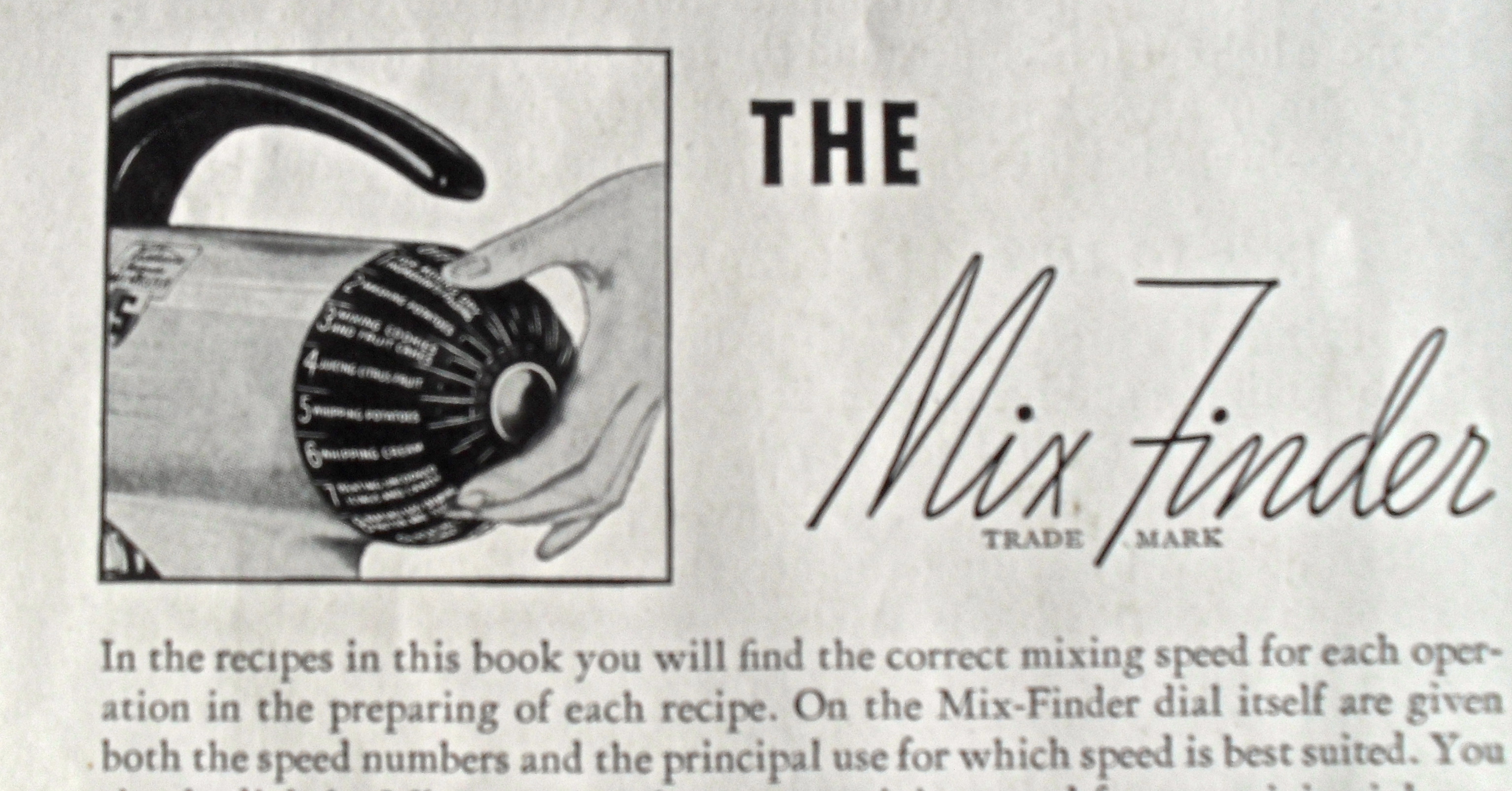
“You now have the finest mixer ever made,” said the manual written by the Sunbeam Home Economics department. The accompanying booklet welcomed home cooks to their “family of nearly five million homemakers” who now were, as owners of this extravagant but necessary device, “saving time and arm-work, and enjoying more delicious foods.”  Claims that “the more you use it the more helpful it will become”  would fall flat in my mother’s kitchen.

In those days, my mom’s cooking repertoire was limited. “I was a creative cook,” she asserts today, decades after her Sunbeam Mixmaster was shoved into the back of a cupboard, first in her home and now in mine.  Her efforts in the kitchen consisted mostly of timid experimentation and moderate success with various jello “salads” and “molds”;  however, her one claim to fame among the Wayne Avenue mah jongg-ers was her Orange Chiffon Cake. And the Sunbeam Mixmaster was the reason why.

The Mixmaster’s design is distinctive.  It is streamlined like the fins on a 1950‘s cadillac, and if it had doors, they would close with the same solid Caddy clunk. It sports a grill like that of a Ford truck– and weighs about as much. Shaped like the fuselage of a WW II Spitfire, the old Sunbeam helped my mom to win the dogfight that she faced in the kitchen when it came to Orange Chiffon Cake. (See recipe below.)

With over fourteen pages in the owner’s guide dedicated to multiple attachments, the booklet reads like a plumber’s manual with illustrations of couplings, joints, screws, and washers. An auxiliary motor drives a meat grinder, food chopper, can opener; a potato peeler, juicer, drink mixer, a knife sharpener, and– I kid you not– a silver polisher and buffer. And did I forget the butter churner, bean slicer, and huller for peas?  The homemaker of the 1950’s obviously had lots of time on her hands to use her time-saving appliances.   A miniature hardware store, this entire collection of geegaws constituted an enormous amount of crap that took up space and was just more mechanical stuff to break.  But it was this cumbersome electric mixer which built my mother’s confidence as a baker. While everyone else’s version of chiffon cake was, according to my mom, wet on the bottom and weeping citrus goo as it collapsed upon slicing, hers remained tight, firm, and dry. ( Dry? That was good? )  It was the one thing that came out well in her Mixmaster, she said.

My mother most certainly never read the first cardinal rule of the Mixmaster manual on page four:   “Do not overbeat.”   Since “more is better” was always one of her key cooking principles, the secret to her “success” was clear. If the recipe called for beating eggs whites for 5 minutes, Rheta, I can assure you, with the help of her fancy Sputnik era machine, beat them longer–  well past the glossy-and-stiff stage into the dry-but-not-separated realm.  Then, with her over-folding and over-baking, the fate of the cake was sealed.  Her orange juice laced chiffon cake may have been springy and held its form, but the women in her mah jongg club were more than likely enjoying a tasteless and arid confection which induced immediate thirst.

Today, Rheta has become a much more sophisticated and skilled cook than she ever was as a mother and housewife, and I am proud of her knowledge and interest in good food. But she still has no use for an electric mixer.   At best, she was more of a social baker who took her turn baking for activities at the synagogue, and I do remember enjoying a good many boxed cakes she beat to death in that mixmaster in honor of each of our birthdays.  I have no memory of ever eating her Orange Chiffon cake.

Rheta’s  Mixmaster just celebrated its 64th birthday last week. I take it out from the bowels of my lower cupboards occasionally for a test drive and just for nostalgic reasons. The smell of the overheating electric motor and bakelite finish are both a memory of my youth and a clear indication that the mixer could use a good overhaul and oil change.  In my childhood, I was not allowed to ever use the mixer. I did sneak using it once to make brownies for my Girl Scout troop and ended up with globs of chocolate batter dotting the kitchen cupboards and ceiling. The strenuous clean up and panic of being found out pretty much cured me of my fascination with the mighty mixer. To this day, I prefer whisks, stainless steel bowls, and wooden spoons.

 Happy 64th Birthday to my mother’s Sunbeam Mixmaster!

I don’t even own a KitchenAid stand mixer, though I am tempted to purchase one as a symbol of my foodie status and as a colorful embellishment to my kitchen countertops. (I’ll take pistachio or a burnt orange, thank you.)

The Good Housekeeping Institute boasted in the Mixmaster manual that “…you can’t overwork the Automatic Mixmaster.”  My mother took to heart the advice of the Sunbeam company in her one and only baking achievement.

 ORANGE CHIFFON CAKE

 The following recipe is from about 1956.   While chiffon cakes first appeared in the late 20’s, they became all the rage in the 50’s. Recipes were passed around, and that’s where my mother got her recipe.

 The key to a successful chiffon cake is properly beaten egg whites and a correct ratio of liquid to dry ingredients. Baking in an aluminum tube pan in an even baking oven is also going to give the best result.

INGREDIENTS:

Screen Shot 2013-01-22 at 6.30.50 PM main-qimg-e3f7157c9994355f61b766231006a30d

ABOUT THE EGGS: IMPORTANT

–Separate the yolks form the whites while the eggs are still cold.

–Cover each bowl of yolks and whites with plastic wrap and bring to room temperature (about 30 minutes).

PREHEAT OVEN to 325º and PREPARE PAN, a 10” tube pan UNGREASED.

In your ELECTRIC MIXER:

–place flour, sugar minus 1/4 cup, baking powder, salt, and orange zest and combine.

–Create a well in the center of the flour mixture and add the egg yolks, oil, orange juice, and vanilla extract and beat until smooth (about a minute). Scrape the sides of the bowl during beating.

In a CLEAN, GREASE-FREE, SEPARATE BOWL in your ELECTRIC MIXER:

–Beat the egg whites until foamy. Then add the cream of tartar.

–Continue beating until soft peaks form.

–Beat in, gradually, the remaining 1/4 cup of sugar, until STIFF PEAKS form. (You should be able to invert the mixing bowl and the egg whites will not slip out).

–Then FOLD the beaten egg whites into the first batter gently using a LARGE RUBBER SPATULA.  Fold until just blended. Avoid deflating the batter.

POUR BATTER INTO THE UNGREASED TUBE PAN:

–Lightly drop the filled pan onto the counter to release air bubbles..

–Bake for 55 to 60 minutes, or until knife or toothpick inserted comes out clean.The cake should spring back upon light compression.

–Remove cake from oven and cool UPSIDE DOWN. (You can suspend the pan on a bottle).

–Cake must COOL COMPLETELY before removing it from pan (1-1/2 hours).

After removing the cake from the pan using a spatula run along the edges, set it on a rack and dust with confectioner’s sugar or drizzle an orange flavored glaze on top.  Serve with ice cream or whipped cream. 
Always Be Prepared: Swiss Army Knife Style Measuring Spoons

Leave a comment

No knives were involved in the making of this kitchen gadget.  Made of dishwasher safe plastic, the set of square-shaped measuring spoons is great for hands free measuring. Just lay it flat and pour .

The compact design lets spoons fit nicely into the jackknife sleeve for easy storage (and child safety).

To date, GamaGo has made only one model; there are none with scissors, toothpick, or corkscrew. And at $10.00 a pop, you might not want to be carrying a set of these when you go through airport security.        –MELorden


 swiss-1012712_swiss_army_measuring_spoons_2IMG_0734-160x300

Food of the Fifties

1 Comment

HAPPY DAYS AND HAPPY HOMEMAKERS:  FOOD OF THE FIFTIES

What? The boss is coming home for dinner?  What’s a happy homemaker to do?

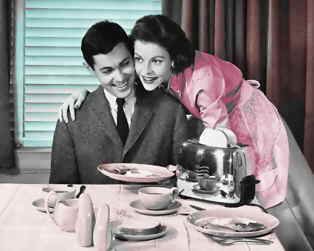
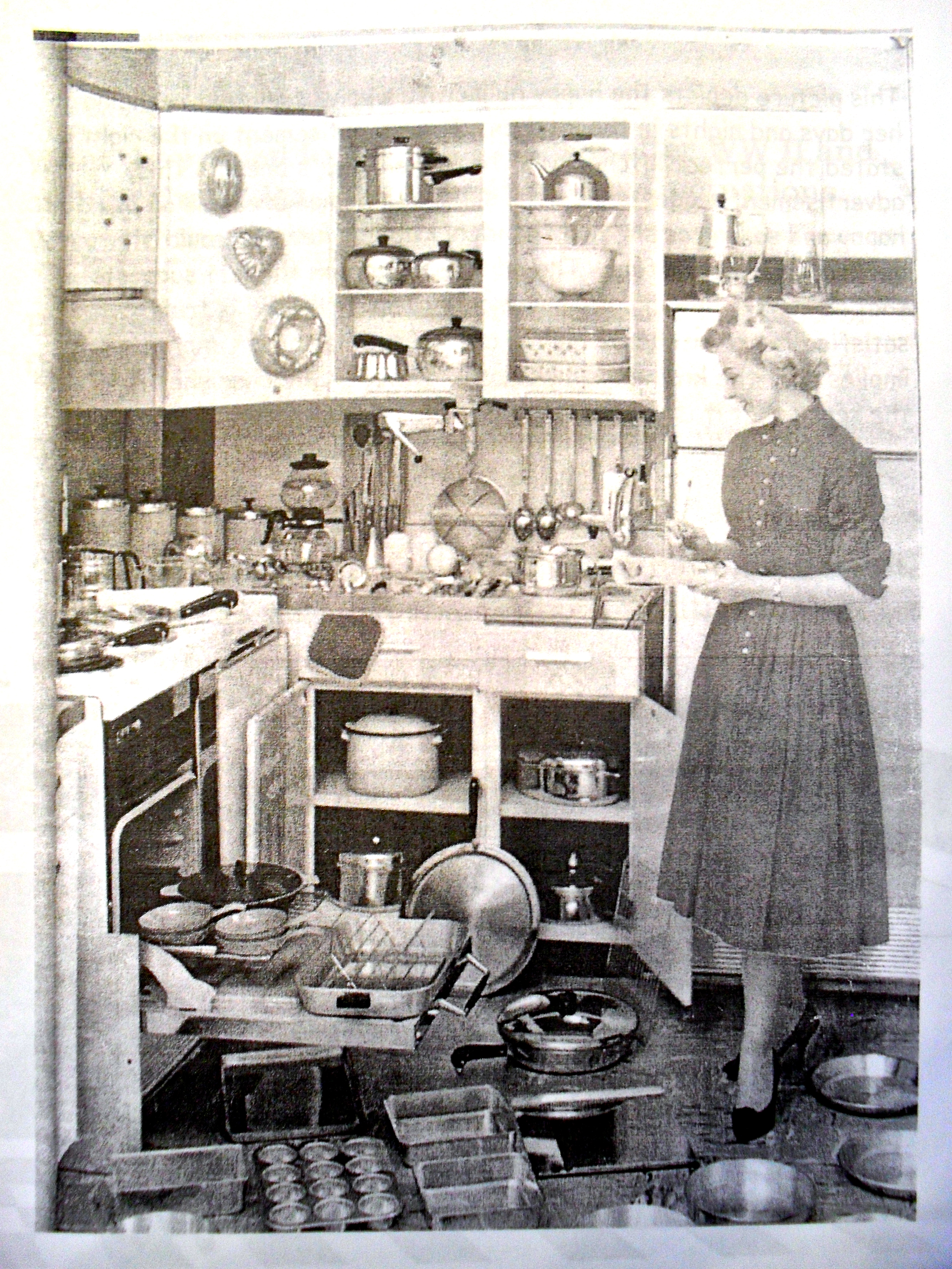
No problem.  With her ideal kitchen now a reality, the housewife of the era could automatically get a fine meal on the table. Any decent suburban kitchen of the 1950′s was stocked to the gills with canned goods, frozen vegetables, boxed magic meal helpers,  fabulous cakes mixes, and instant puddings. Post- war appliances were affordable and stylish, and  consumers were on the march.

7817_281598855050_319909_n

Even with her hair still in curlers and the arrival of her husband and boss only a train ride away, the missus could not fail to whip up, on short notice, a quality home cooked meal. And to do so might contribute positively to the success of her husband’s future career.

Her kitchen was a masterpiece of  both modern efficiency and science as well as her haven and jewel. With the modern kitchen the center of her family life and femininity, the wife and homemaker of the 1950′s aspired to be the hostess with the most-est.

ed077399-c2cb-42b6-8de8-d60a1daca291The classic 1950′s kitchen was a housewife’s dream.  If stocked appropriately with the correct inventory and equipment, it became her domestic laboratory.  Correct tools, abundant and available prepared foodstuffs, and a practical outline of directions and cooking procedures meant that all women could feed their family, and be adored for it.  ”If you can read, you can cook,” was the saying. Cooking was first and foremost a practice, not a fine art. Add in a stylish apron, a string of pearls, a few copies of Good Housekeeping, and the Betty Crocker Cook Book, and the good wife and mother served up family happiness on a plate.
Anybody could make a perfect cake.  Take Betty Crocker’s word for it. She ( a totally fictional character and invention of the advertising world) guaranteed a perfect cake every time you baked.


There was a lot of magic that could come out of that well-supplied workspace.  With a simple wave of her wand, the food fairy of the fifties nourished and delighted her family.  This was her special territory in the household; it was the hearth and heart of the home in the most pleasurable of ways, and she ruled the roost.

In the top illustration, a  handsome husband steals his wife’s hot cinnamon buns as she catches him. Demurely bending over the oven door,  she assumes a submissive posture. The image is  rather subliminal and suggests a sexy secret is present between the couple over those soft, yeasty, and fragrant goodies that he desires. 

In the bottom illustration, the women and children in the family are all happily engaged in kitchen activities. They, and the tea kettle, whistle a happy tune while they work in the warm kitchen setting.  Look carefully to the upper left, and you will see father trying to sneak a peek.  Both illustrations suggest that husbands are guests in their wives’  kitchens. Here men are best kept at a distance from the place where all the magic happens and the secrets of good cooking are kept.

If a woman wanted to please her husband, said the advertisers of the day, it was through his stomach. As the primary shopper for food in her stay-at-home role, the budget-wise homemaker took this notion to heart.  The role of  homemaker and the keeping of the kitchen were serious business in the 1950′s.  But, oh so much easier than it was for her poor grandmother.73503_10150290996625051_3348269_n

Canned and packaged and frozen goods took on a renewed enthusiasm after the war.  Peace and prosperity reigned and veiled the atomic threat, but the atomic age also created a strange sense of security for Americans in the 1950′s. In the spirit of “better living through chemistry” (a version of the DuPont corporation slogan), the food industry flourished.  The 50′s saw the arrival of Betty Crocker and Duncan Hines cake mixes, frozen pot pies and TV dinners, and the important science of home economics. Homemakers were moms and wives, but they were savvy, too.  (For a hilarious look back at a strange and hellacious series of 1950′s food photographs, check out this site featuring typical food styling from the period. Prepare yourself for banana and fern green tinted images and cutlets topped with pineapple rings and red maraschino cherry adornment at the Gallery of Regrettable Food.)

No longer were the days of rationing sugar, eggs, and flour forcing Americans to sacrifice personal conveniences for the military.  Cars and appliances were in demand.  Other raw materials, metals and synthetics, were available for consumers to use.  Marriage and birth rates skyrocketed as did housing as a result.  The family unit in suburbia was the target of industry and advertising, and much of the market was the homemaker and her hungry family.


Silk stockings were no longer rationed and the 100% silk material called chiffon became all the rage.  The length of dresses fell, too.  Soon chiffon cakes and pies became very popular.  A chiffon cake was a fluffy cake that got its poof from stiffly beaten egg whites combined with vegetable oil, flour, baking powder, eggs, and sugar. A version of a one crust refrigerator pie , chiffon pies were made of beaten egg whites and gelatins.  Flavorings for chiffon cakes and pies were often fruits such as strawberry, lemon, or orange, and chocolate was a favorite, too.    For 1950′s confections, taste in fashion informed taste in food.

(See OTK Home Page article :  The Mother of All Mixers: The Sunbeam Mixmaster for Rheta’s Orange Chiffon Cake recipe)

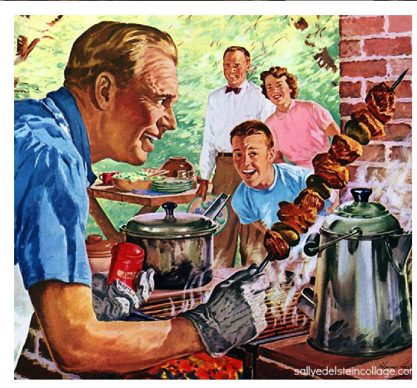
Men, too, had a special role when it came to cooking in the form of the charcoal grill.   Without a fire pit of some sort, the suburban backyard seemed incomplete.  The man of the house could go primal over a smoking grill while discussing the latest anti-communist beliefs and enjoying a few beers.  Burgers, hot, dogs, corn on the cob, and kebabs were all the rage, thanks to the booming agra-business of the day.  Perhaps it was the post-war return from the Pacific islands where  the boys had enjoyed pig roasts and tropical fruits that inspired both the grilling mania and the cocktail party with Tiki drinks sporting little umbrellas. At any rate,  a man who could cook over a raging fire might just help his family survive an atomic apocalypse. The bar-b-que was one of  those 50′s fads that lasted and only got better over time. BBQ and the fine art of grilling has never been more popular in American society than today.

Screen Shot 2013-01-21 at 1.20.31 PM

Today we also celebrate another larger-than-life food style of the era in contemporary and nostalgic re-interpretations of the comfort food dishes found in the highway diner– burgers, fries, mile-high pies, chile, mac and cheese, and meatloaf with mashed spuds.  It was the growing automobile culture and imminent interstate highway system which spawned all manner of road food and drive-ins.  Rock and rollers in their souped up jalopies enjoyed sock hops under the lights of the local shake shacks. Most of these drive-in dishes remain distinctly American and have never waned in popularity.  But mom’s broiled Spam kebabs with pineapple, green peppers, sweet soy and honey sauce, and maraschino cherries have pretty much gone the way of the dining dinosaur, and all those casseroles made with cans of cream of this-and-that Campbell’s Soup may only occasionally surface at church suppers.

Convenience foods and deconstructed and reconstituted packaged meals are still,  unfortunately, de rigueur in areas of the modern diet.The 1950′s are hardly a faded memory when it comes to the major transformations that took place in the production and sale of food since the end of World War II. We are still feeling their effects in our health and diet.  What has changed  most significantly, however, are the expectations for the Happy Homemaker and her role in the kitchen.

In the life of the mid-century American housewife,  whenever the boss came home for dinner unexpectedly, the smart homemaker of the day was expected to design, plan, and execute an impressive dinner. Push a button here, turn a knob there,  or open a package and follow directions. She had only to then set the table, put on some lipstick, ice the glasses–  and remember to take the curlers out of her hair before the guest of honor arrived.        –MELorden

Loosing Appetite? Kitchen Shrink Has Some Thoughts!

Leave a comment

JimTheCook  asks:

Dear Kitchen Shrink,

 ”Why do I lose my appetite for the meal that I just spent hours preparing?”

Kitchen Shrink  replies:

Your appetite takes a dive after cooking for two reasons: First, it is the nature of the human olfactory system, but a part of the reason may be emotional, too.

While cooking, you are exposed to a multitude of aromas and tastes, especially if you are sampling your food to check seasoning.  After a few minutes, your brain experiences what is called  nasal and also tongue “fatigue.”  Researchers suggest that you can re-awaken your taste receptors and appetite by having a cup of coffee.  The high vibration intensity from coffee odor molecules may cause the detachment of  present food odorant from the olfactory receptors, get your saliva flowing anew, and stimulate your hunger again.

On an emotional level, do you get anxious about how your guests will respond to your meal?  It is not uncommon, when entertaining, that being both the host and doing the cooking is stressful.  Do you ever feel  worn out after all that planning, chopping, sauté-ing, and presentation that is required into getting that special meal on the table?  It can be quite exhausting. After all that exertion, much like sweating after exercise, hunger is diminished. Add in the extra pressure to make it look easy and to look damn good while you are doing it,  and it is not unusual for the appetite to go south.    Sipping wine during the cooking process is socially charming, but may also contribute to curbing your appetite by the time the plates hit the table.

I mean, I really hate to get all psychological on you, but smell is a very powerful source of pleasure and pain and can awaken in an individual many deep memories and emotions. The smell of  things burning or other foul odors can trigger emotional responses and serve as warning systems. Perhaps some of your cooking techniques trigger these responses in you, but  hopefully, not in your guests.

Hottest Superfoods!

Leave a comment

THE HOTTEST  SUPERFOODS FOR OPTIMUM HEALTH

Can you guess what the nutrition experts of 2013 say are the best sources of healthy eating?  

You may be surprised, or relieved, if any of these items are already part of your eating plan.  

Which of these foodstuffs do you currently have in your pantry?  

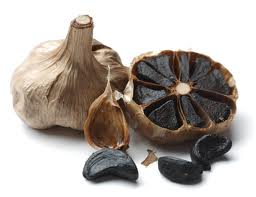
BLACK GARLIC  (A delicate and fermented version that doesn’t have that “afterglow” of the original white.  Black garlic is a powerhouse of antioxidants and tummy friendly pro-biotics.  Best in sauces or roasted for a paste-like bread spread.)

Unknown

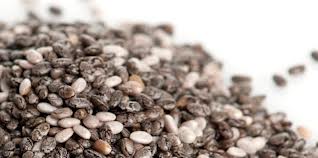
CHIA SEEDS  (Will these put hair on your head?  Nah. They are super seeds and contain more Omega-3 than do flax seeds.  As excellent protein sources they can be eaten whole or used to thicken sauces or puddings. Hmmmm. Chocolate shake with chia seeds, please.)

images

FARRO (Long a staple of the Roman soldiers, this fiber-rich grain, is far higher in protein than wheat.  Think of it as a great addition to soups or in a hearty salad.)

FERMENTED FOODS ( Pickled products fight blood clots, are full of anti-inflammatory nutrition and good bacteria.  Kimchi, sauerkraut, miso, et al are loaded with enzymes to aid digestion.  Pile on the pickles.)

pretty-pickles

FRUIT ENZYMES FROM PAPAYA, GRAPEFRUIT, AND PINEAPPLE  (These enzymes can help you digest all food more efficiently, make excellent nibbles, and provide quick energy.)

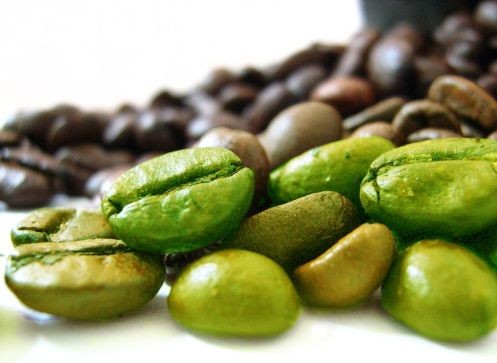
GREEN COFFEE BEAN EXTRACT  (A green coffee bean is an unroasted one.  It contains more antioxidant value than a roasted bean and weightloss claims abound. With a slightly sweet taste, these beans can be combined with fruits for drinks and shakes. Great for an energy pump.)

extract-of-green-coffee-beans

MEATLESS PROTEIN (Best are those derived from legumes like lentils and chickpeas, brown rice, peas, hemp, and peanuts.  Soy?  Not so much– unless in fermented forms.)

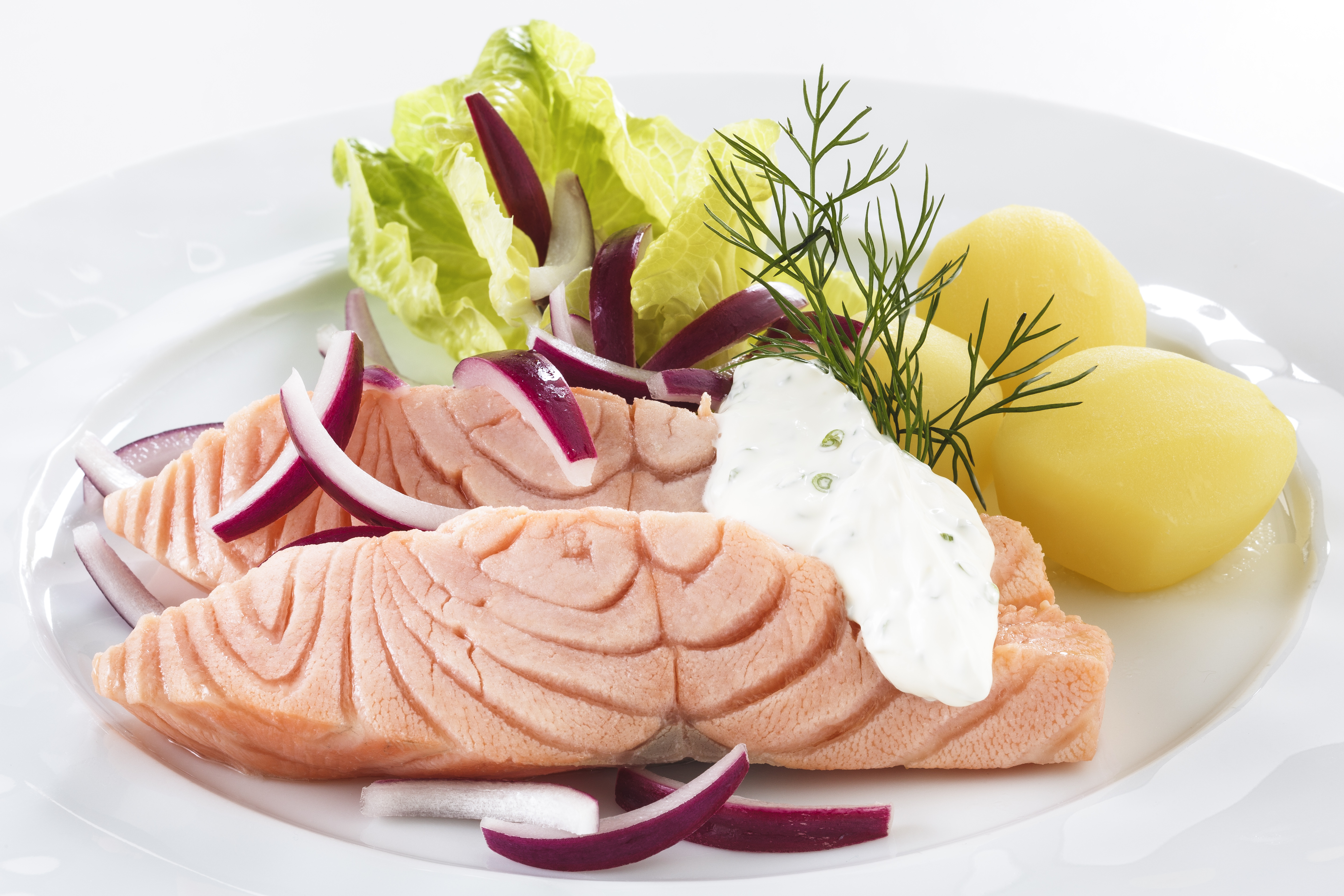
NORDIC FOODS(Scandanavian nations enjoy diets rich in omega-3 thanks to a focus on fish like salmon and herring  Don’t forget those lingonberries, which like blueberries are full of antioxidants.  Plenty of fermented foods such as pickled beets and onions and their love of dill and other herbs could all contribute to lower rates of heart disease.)

 
New Nordic Cuisine - Pickled Norwegian Salmon with horseradish cream1

PERUVIAN FOODS (Seafood dishes like civiches and the use of hot chile peppers and ginger add zing and create meals high in lean proteins and packed with flavor.)

The observers of health trends included a few standard, expected  items: It’s no surprise that TEA is listed.  The health-conscious have been singing the praises of green teas, spicy teas, and grain-focused teas for a while now, but they are now appearing front and center on restaurant menus.  Also,  the old staple OATMEAL, in gourmet versions with condiments like fresh herbs, roasted vegetables, or cheeses like goat and ricotta– even with poached eggs– are pumping up the volume beyond the classic Quaker Oats breakfast option. DEHYDRATED SEAWEED has been a staple of Asian diets and Japanese snack food. Lots of chip-like crunch, salty and nutty flavor disguise the Vitamins (A and B), potassium and antioxidants contained in these low calorie treats.

If you don’t have these uber-healthy foods in your larder, give them a try.  They are all kind to your metabolism, digestion, and waistline.  You can be both hip and healthy at the same time. –MELorden

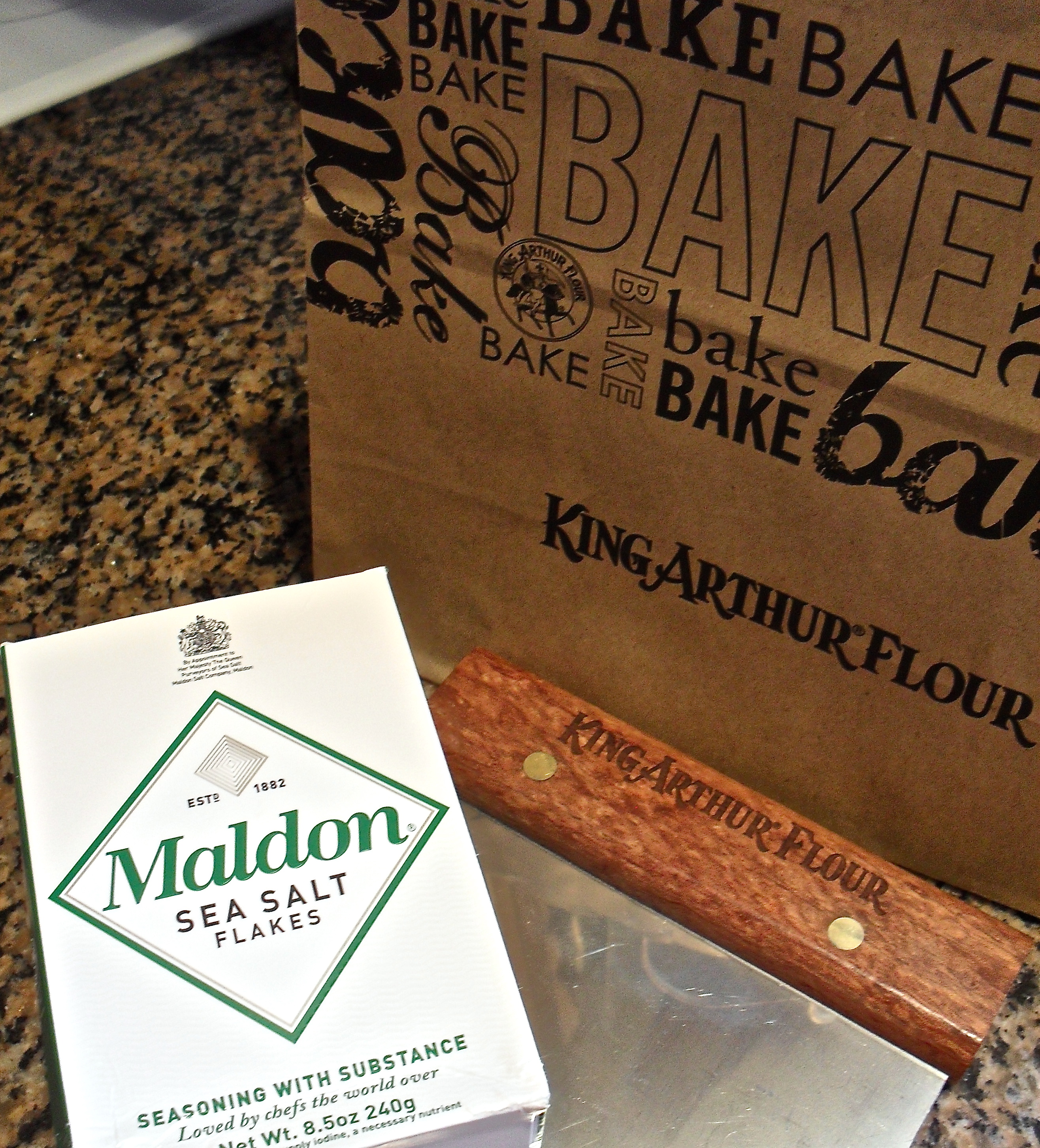
outtathekitchen to King Arthur Flour

2 Comments

OTK took a trip outtathekitchen and into Vermont to visit a famous flour company founded in 1790 in Boston.

In 1984 it moved to Norwich, Vermont where it now has its central headquarters. Come along and visit the home of  The Baker’s Catalogue.


On this pilgrimage to Camelot, the headquarters of  the King Arthur Flour company, I visited the Baking Education Center, Baker’s Store, café  and their kitchens.

This visit was particularly meaningful to me. In the early 1900′s, my grandfather Thomas Esersky used to take a train from Claremont, NH to Boston to buy King Arthur’s large bags and barrels of rye, whole wheat, and white flour for his Ward 7 Bakery.  My grandmother Edith made a Russian black bread greatly favored by  the local Polish and Russian immigrant populations.

static_1896

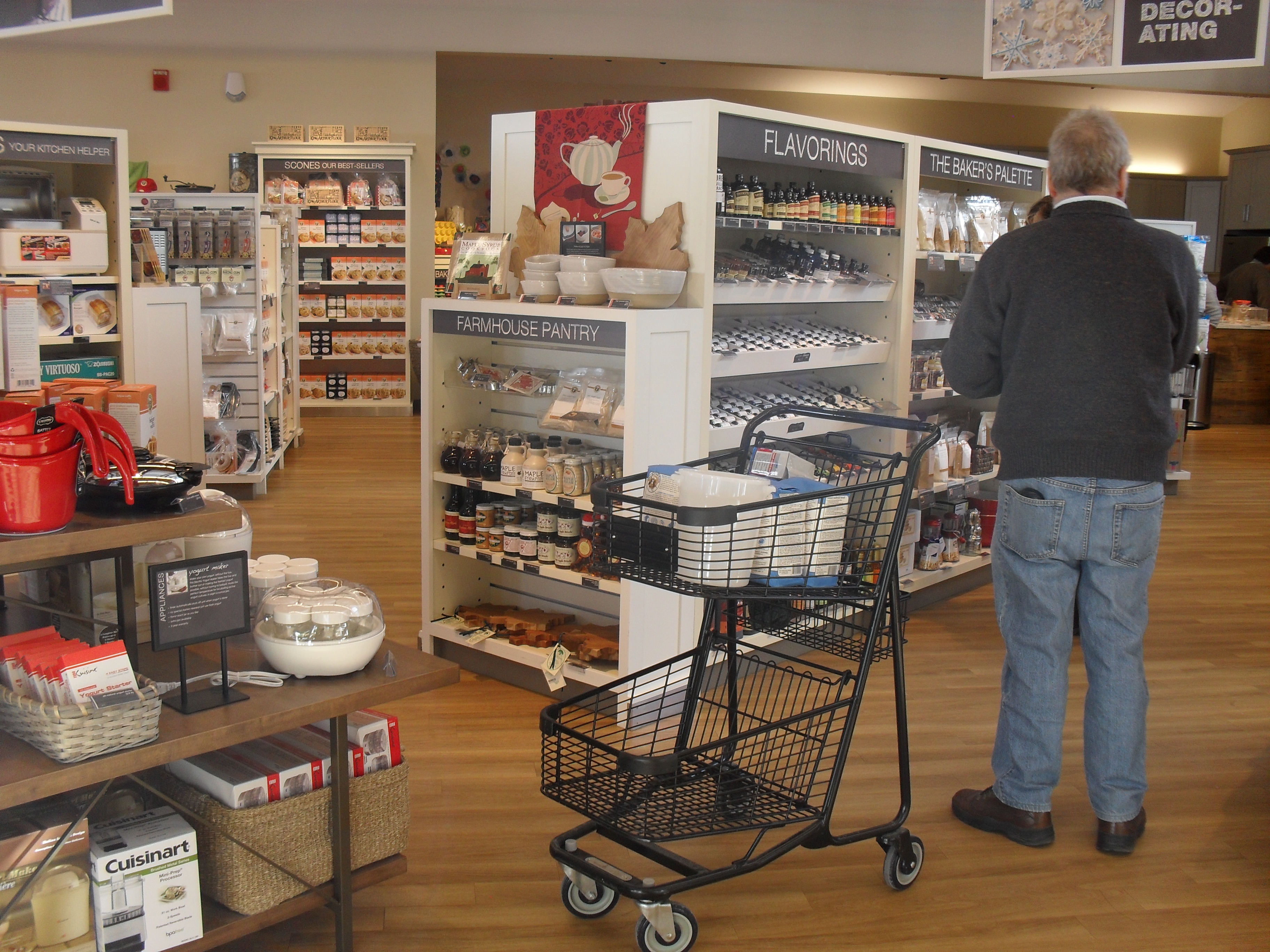
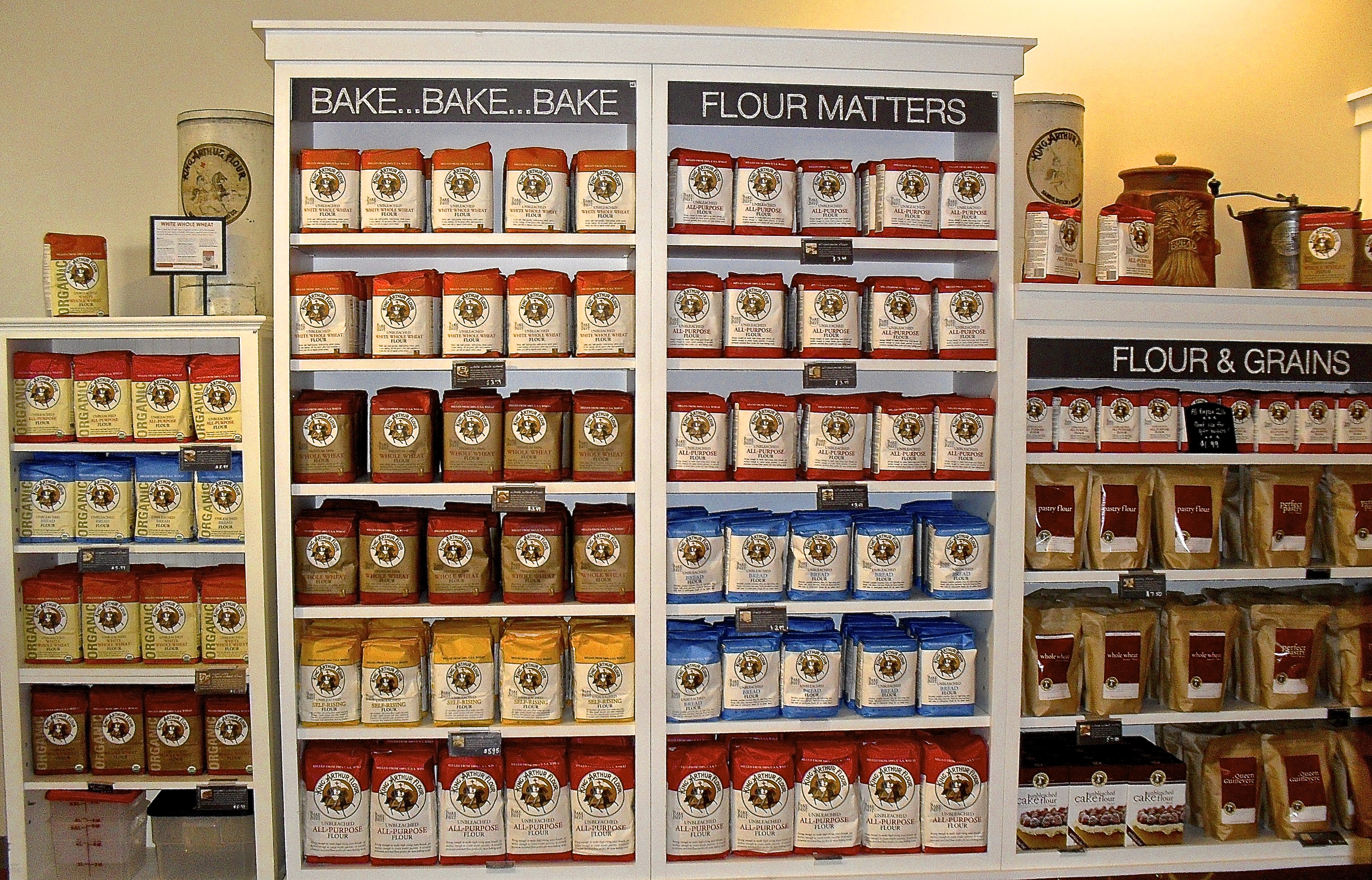
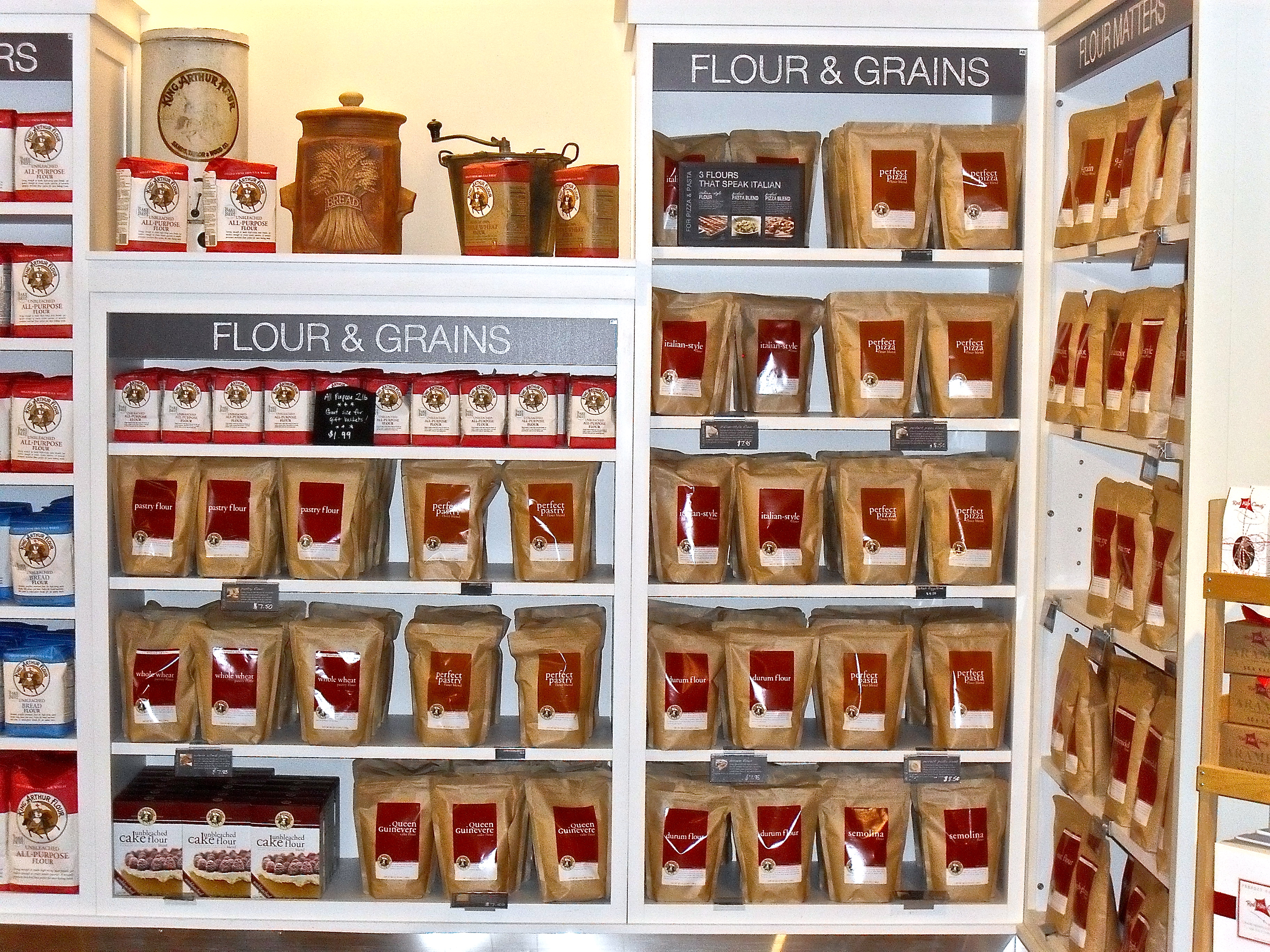
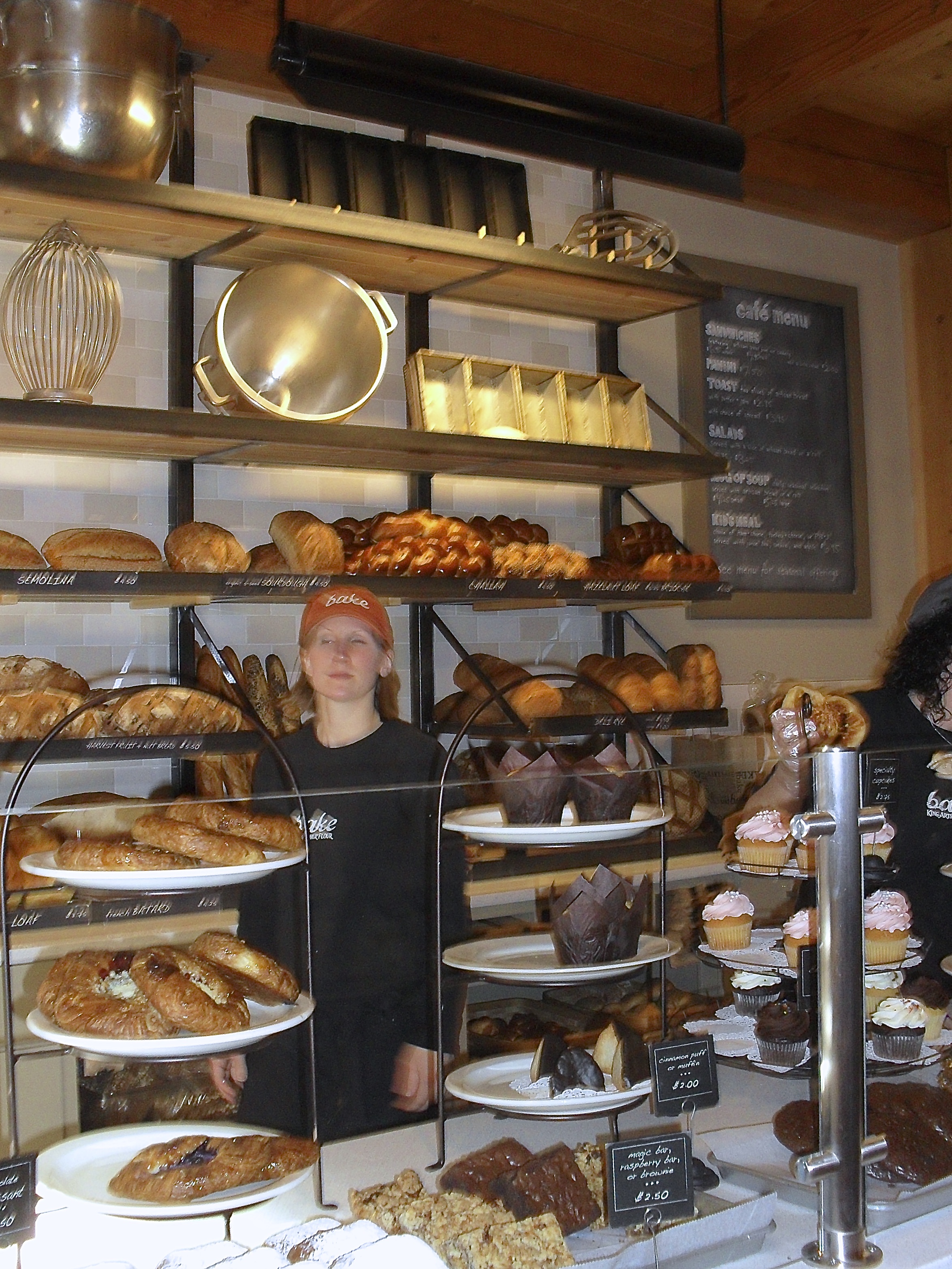
The spacious retail center has an eye-popping array of every flour type imaginable, including gluten-free variations, along with packaged products such as scones and muffins, bread batters, cookies and squares, toppings, flavorings– everything imaginable for preparing baked confections.  Plenty of upscale kitchen gadgetry and gifts galore at every turn, too.


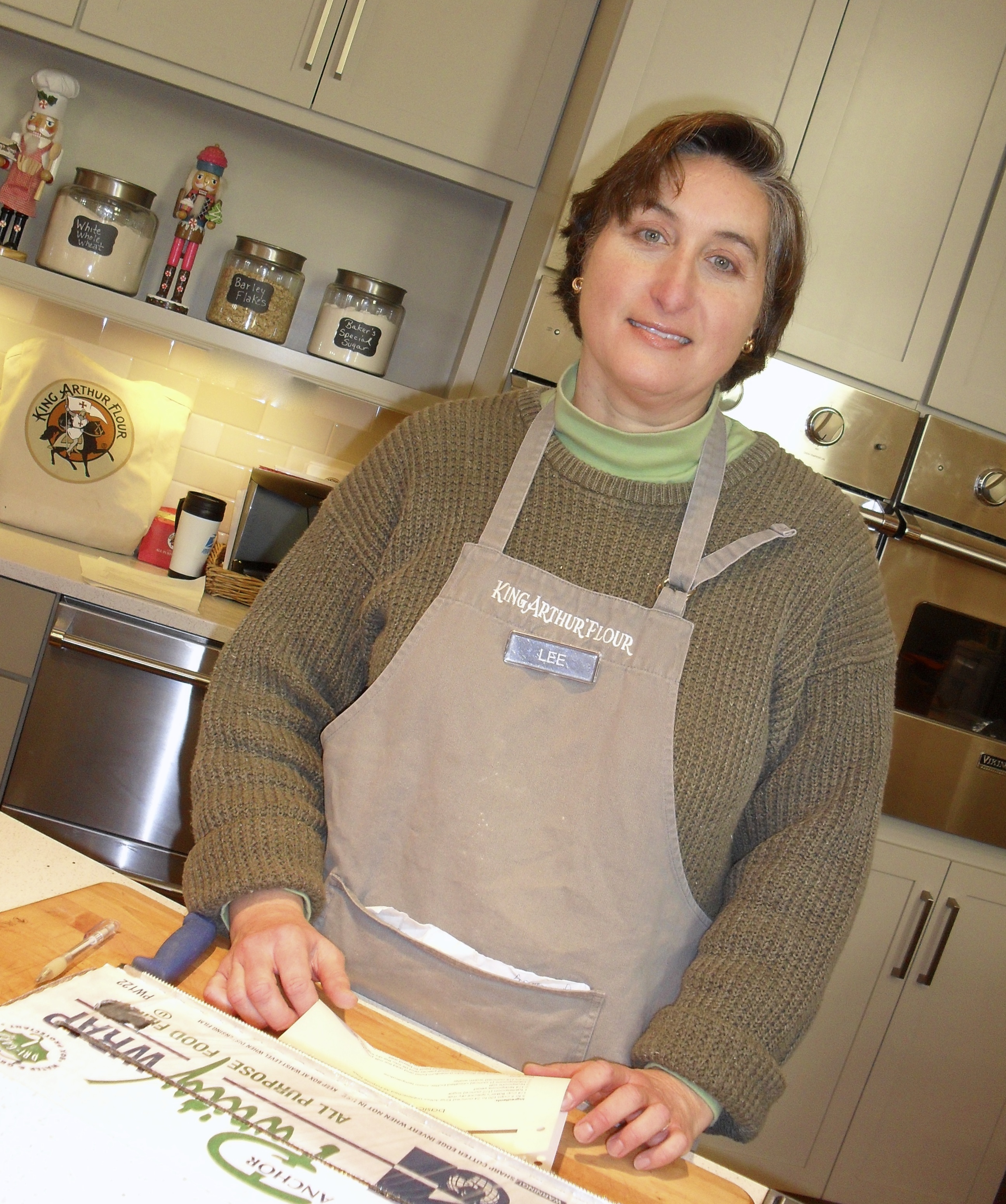
There is also a new baking demo area where I  met Lee who had just finished off some basic bread recipes and two kinds of scones, white and wheat flour.   I enjoyed chatting with her (as well as “testing” the free samples. I could not believe how tender and rich the whole wheat scones were).

The highlight of the visit was the chance to go behind the scenes of the whole operation to see where skilled bakers make all the products for the KAF cafés and several nearby food stores.

These guys had been here since 4:00 AM and were still in a good mood. This kitchen looked like a very cool place to work. And it smelled heavenly.

KAF brags a 100% employee owned company.

Angela Fredericks, a 3rd generation baker from the midwest, works massive amounts of beautiful and elastic dough into exactly 3.5 lb loaves

Her grandparents and parents ran Frederick’s Bakery in Sheboygan.

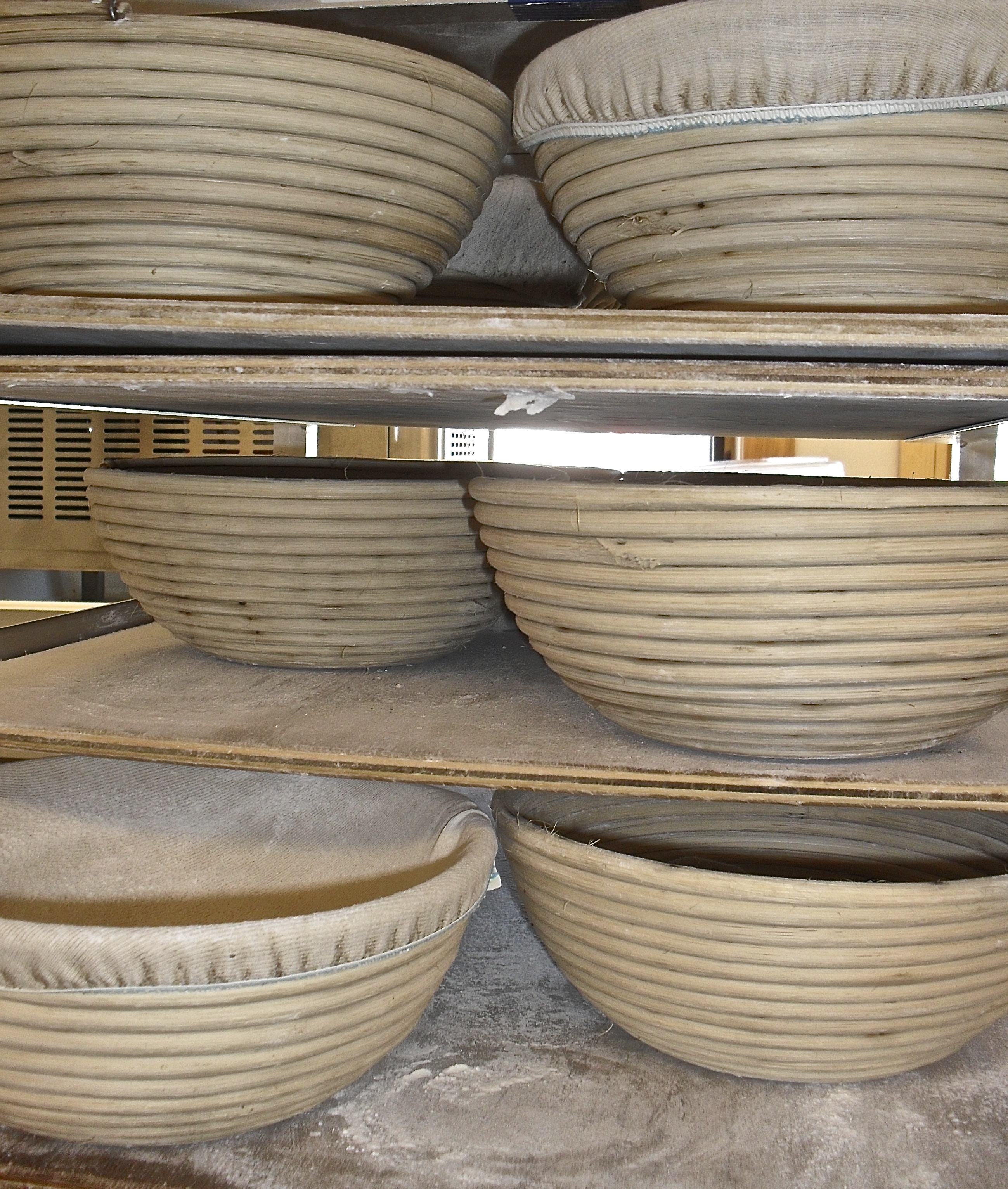
Clouds of puffy and fragrant dough will see another rise before being baked.

These  dough-rising baskets, or brotformen,  are made of coiled willow and are sold for the home baker  in the retail area.

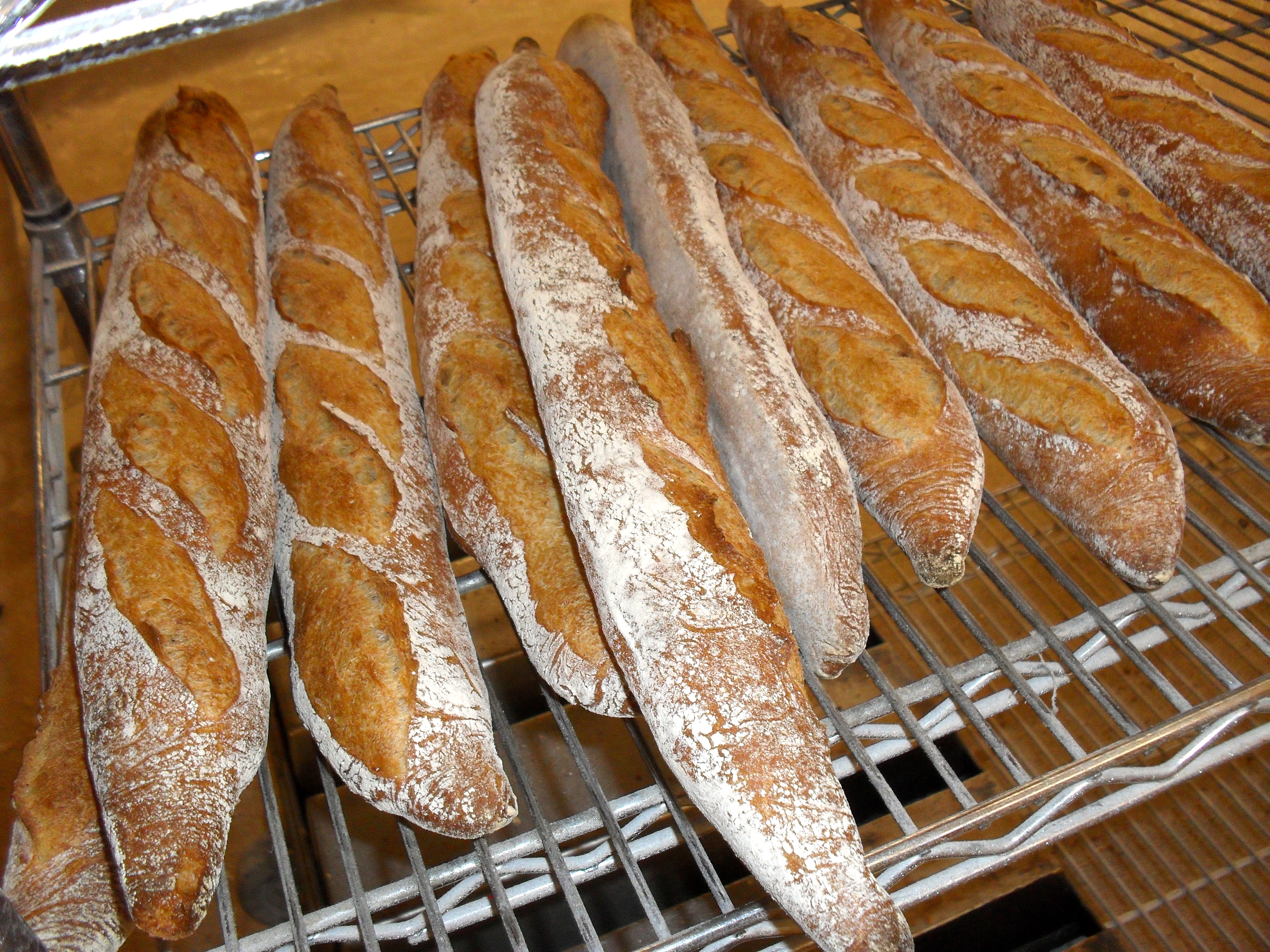
Nearly 40 different varieties of bread are baked on the premises on specific days, (see listing at http://www.kingarthurflour.com/visit/bread.html ), but today featured deli rye and classic baguettes.

There is also an impressive cookbook selection focused exclusively on the art of baking.

For a listing of the King Arthur Flour series of cookbooks, see

http://www.amazon.com/s/ref=nb_sb_noss_1?url=search-alias%3Daps&field-keywords=king+arthur+flour+cookbooks

And don’t forget to check out the handsome Commemorative edition of the Original King Arthur Flour Cookbook celebrating 200 years of KAF.

Next, it was time for a peek at the spacious education center. Courses are generally booked solid.  I met guest teacher, consultant, and educator,  JamesMacGuire of Montreal.  He was preparing for the upcoming class on brioche and croissants– a challenging level of difficulty here. MacGuire emphasizes the importance of the artisan’s hand in making these French style breads.

When the new center was reconfigured and refurbished, the directors and staff decided to save the original bread oven.  It now sits on the entrance to the property, and there are plans to develop a community oven program.  It is a magnificent piece of masonry and seems to be weathering the Vermont winter well.

Before departing, I treated myself to a piece of  roasted tomato pizza– fresh and yeasty crust with intensely flavored grape tomatoes and basil.

Nor could I escape the allure of  the specialty raspberry and lemon curd filled cupcake.  It never made it back to the car.

I am sure to return to shop and get the salted caramel glazed cupcake next time.

And I picked up a few items from the retail store as well.

No one escapes King Arthur Flour’s digs without some fond food memories and a couple of  treasures from this castle of confection.

–MELorden   

http://www.kingarthurflour.com

Peruse The Baker’s Catalogue and be prepared to experience a baker’s dream.

For an excellent history of the company, see

http://youtube.googleapis.com/v/l3wq5zQtAm4

The website is terrific and there is plenty to explore.

Many thanks to my delightful tour guide, Terry Rosenstock, Public Relations Coordinator at KAF.

Coming Attractions in the new issue of OTK for Monday 1/21:

2 Comments

OTK presents a 1950’s food focus in its second issue.

Take a step back into the mid-century, “modern” kitchen

for an Adventure in Food History!

Screen Shot 2013-01-18 at 8.57.20 AM

Featured Articles

“The Mother of All Mixers:  The Sunbeam Mixmaster”

“Cooking  from Comic Books:  In the Kitchen with Disney Classics”

“On the Road with OTK”  presents a special tour of  the newly refurbished King Arthur Flour

 flagship bakery store, café, and education center.

Enjoy our regular columns featuring

wacky new kitchen gadgets, cookbook reviews, and the sage wisdom of our OTK’s own Kitchen Shrink.