Eating Italy

2 Comments

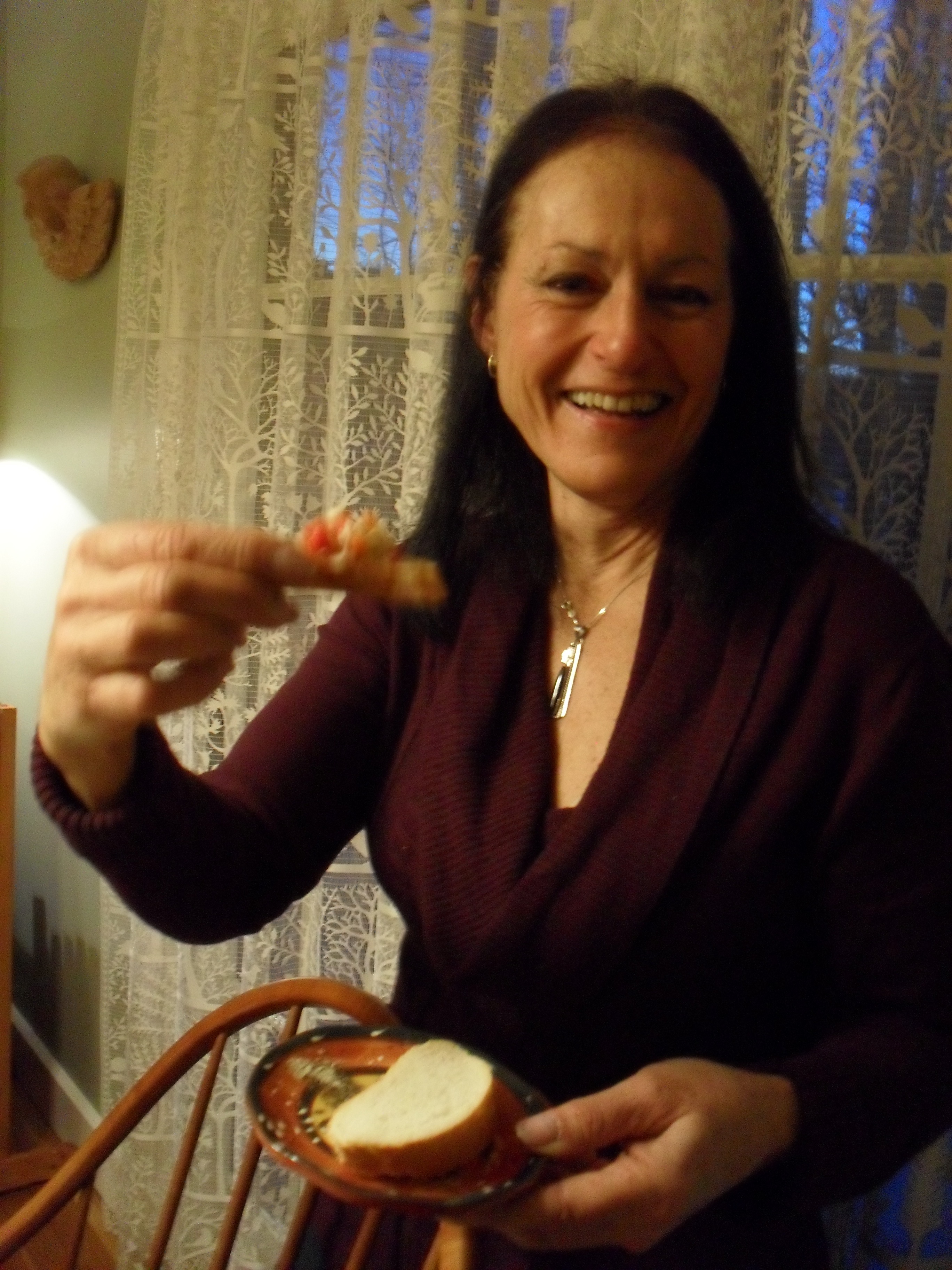
Sometimes it’s just fun to post a great eating experience here at OTK, and Sunday was a real festa for the foodie meet up group I recently joined.    (Upper Valley Adventures in Food and Wine: (organizer Cindy Blakeslee) )

My husband and I hosted the dinner and welcomed 14 excellent home cooks with their amazing Italian dishes.  The menu was as follows:

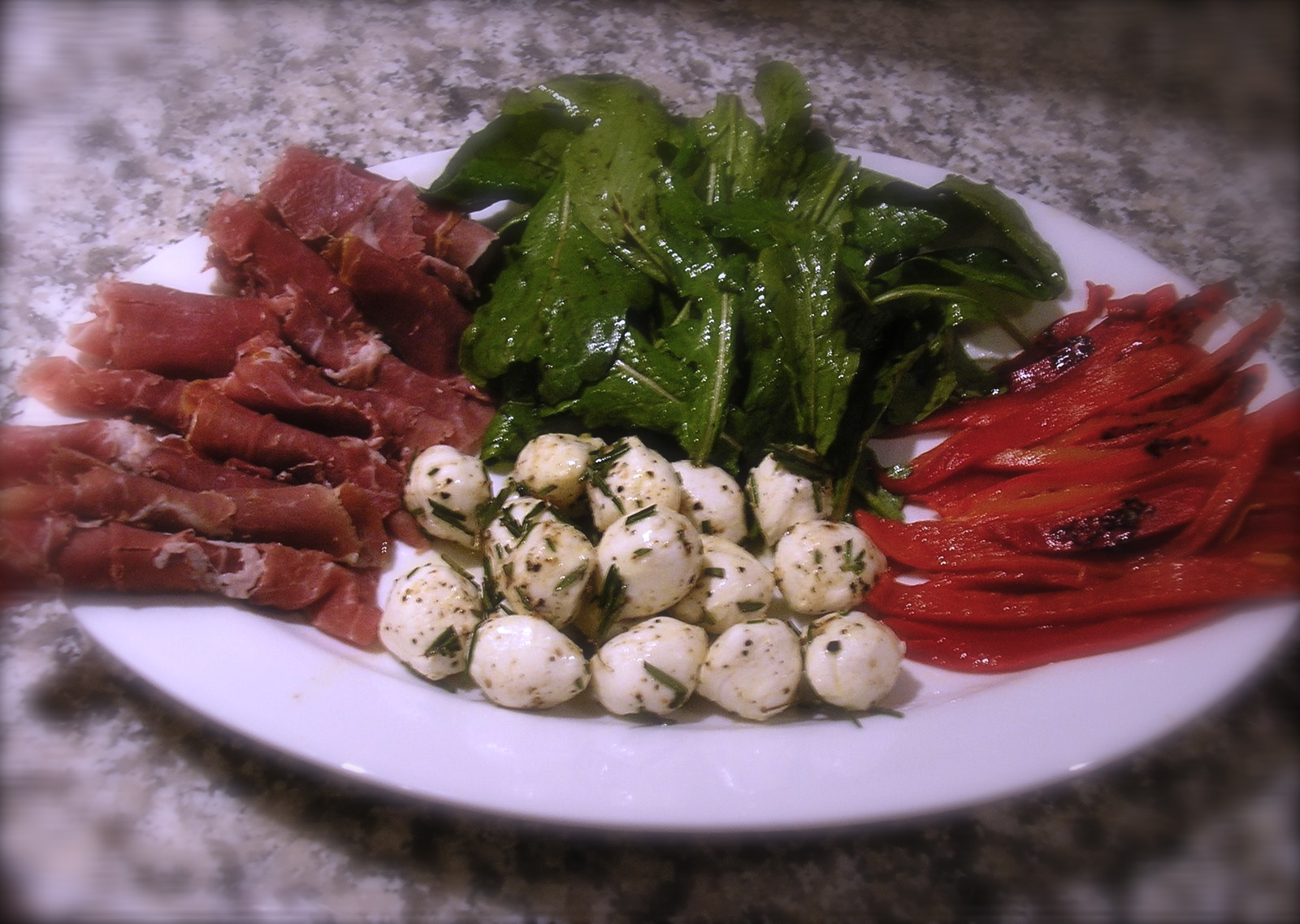
Antipasto: Tomato Bruschetta, Cold Platter (artichoke hearts, various salamis, olives, roasted red peppers, lupini, mushrooms ), Artisan Bread with Seasoned Olive Oil

Primo:  Pasta al Forno: Lasagna of Roasted Vegetables, Ravioli: Made-from-scratch Mushroom Ravioli

Secondo:    Roman Style Braised Oxtail Stew with Polenta,  Braised Chicken with Lemons and Olives

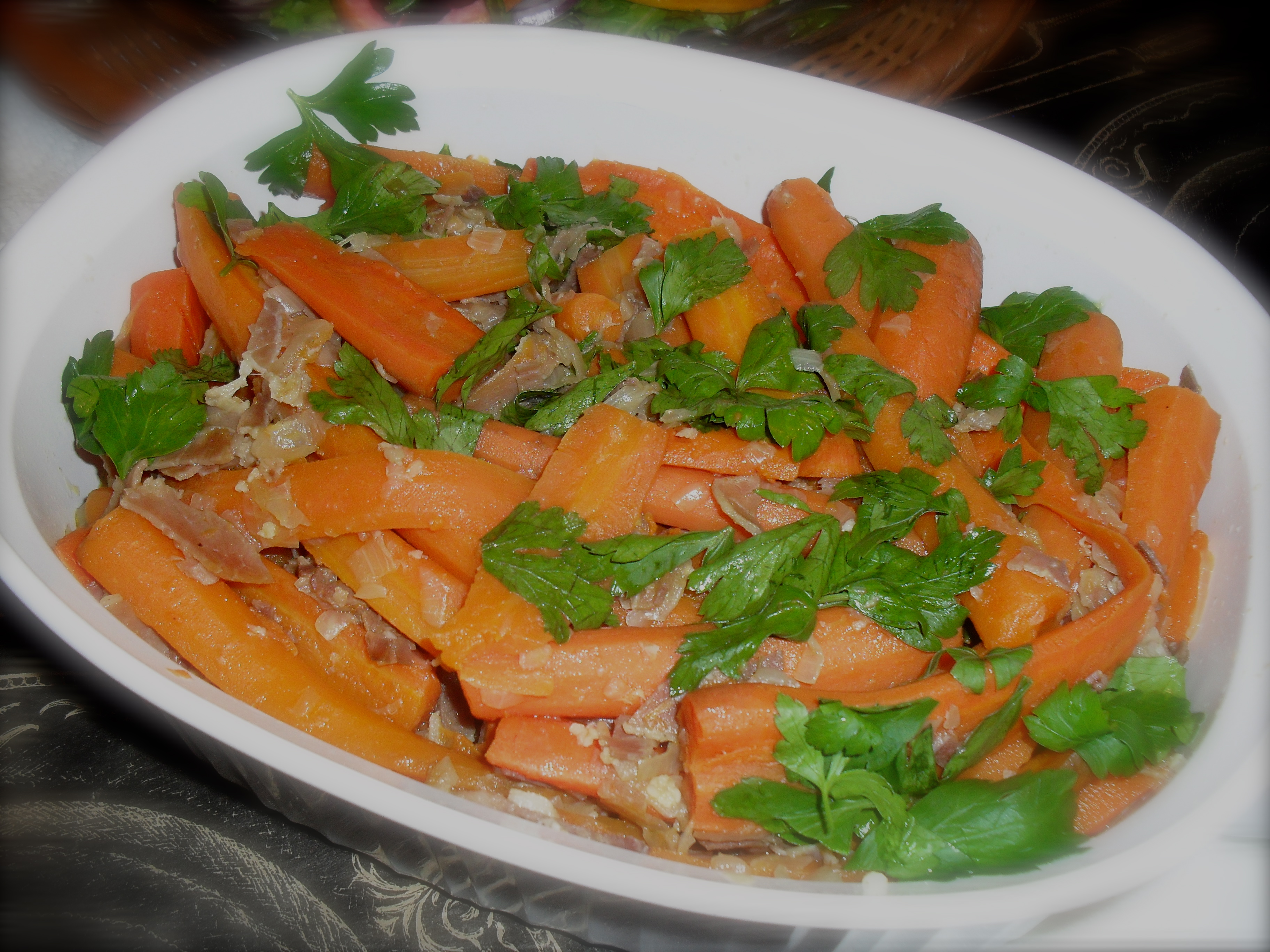
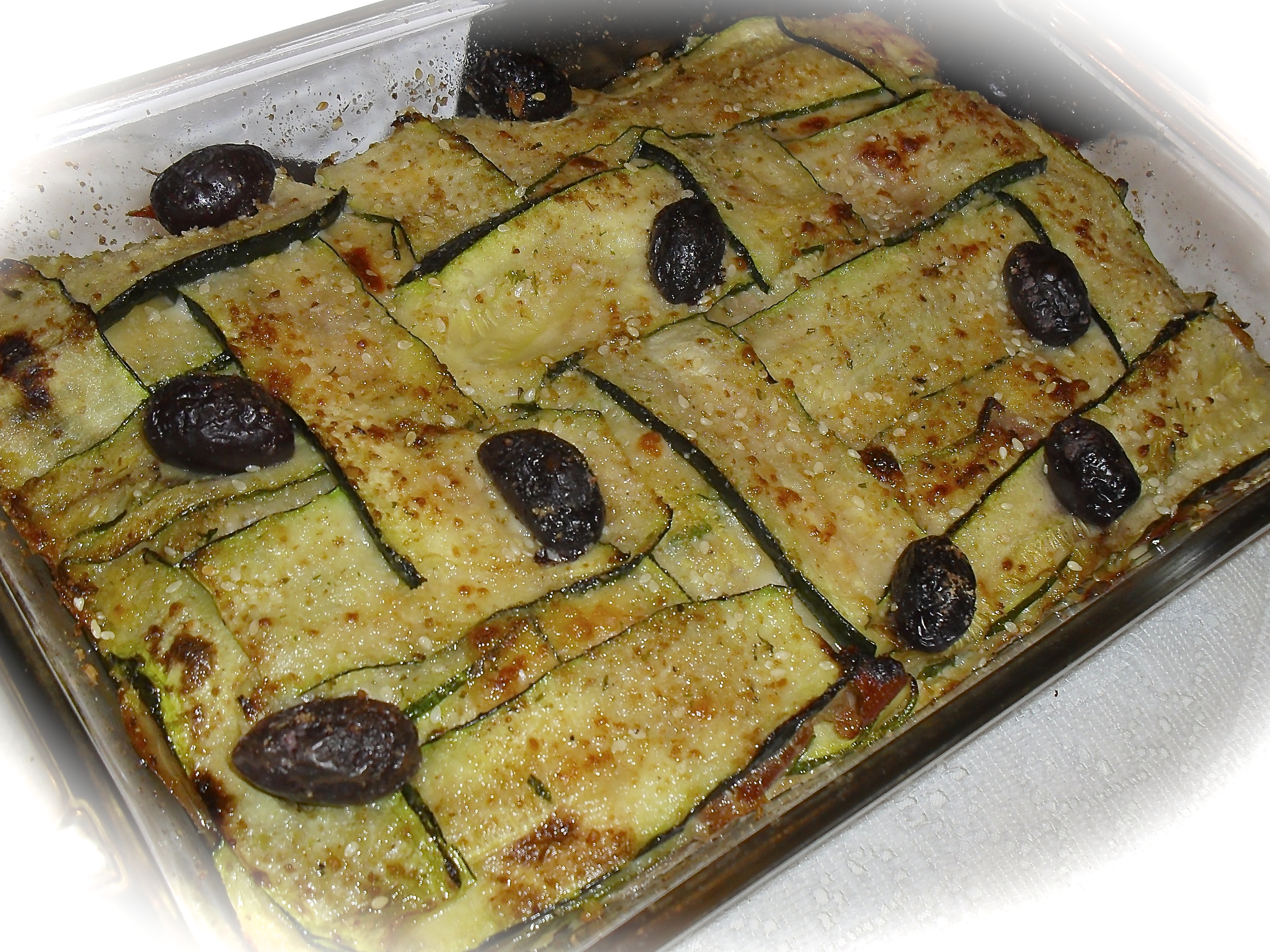
Contorno:  Zucchini Layered with Smoked Provalone and Prosciutto, Carote di Stufato
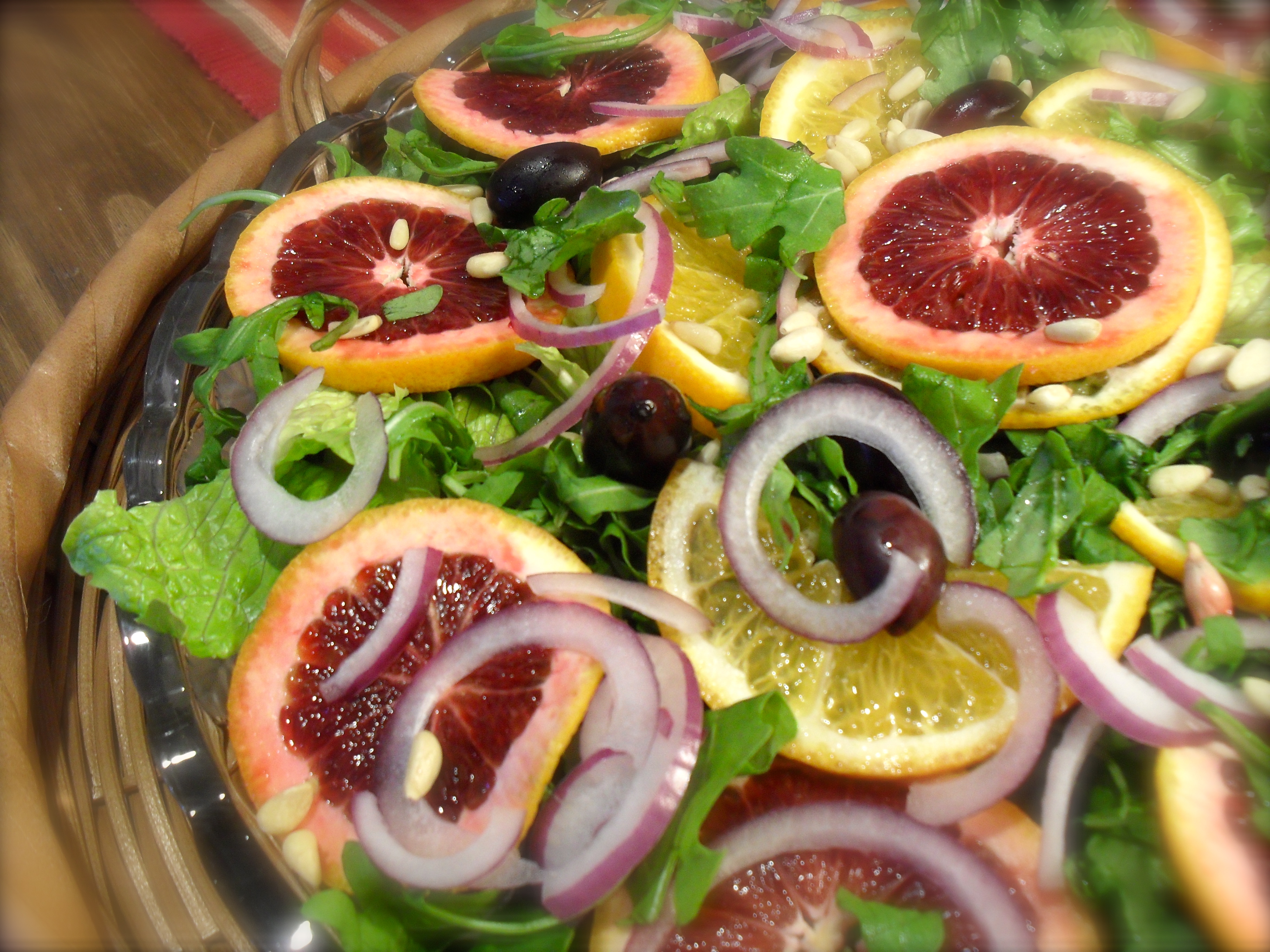
Insalata: Sicilian Blood Orange Arugula Salad with Red Onion, Olives, and Pine Nuts (dressed with white balsamic, olive oil, garlic, and lemon zest vinaigrette)
Dolce:  Fruit and Cheese Plate, Handmade Pizzelle and Cannoli

Wine:  6 Varieties that were opened and consumed so quickly that I never got the names of them.  The empty bottles went directly into recycling. Geesh!
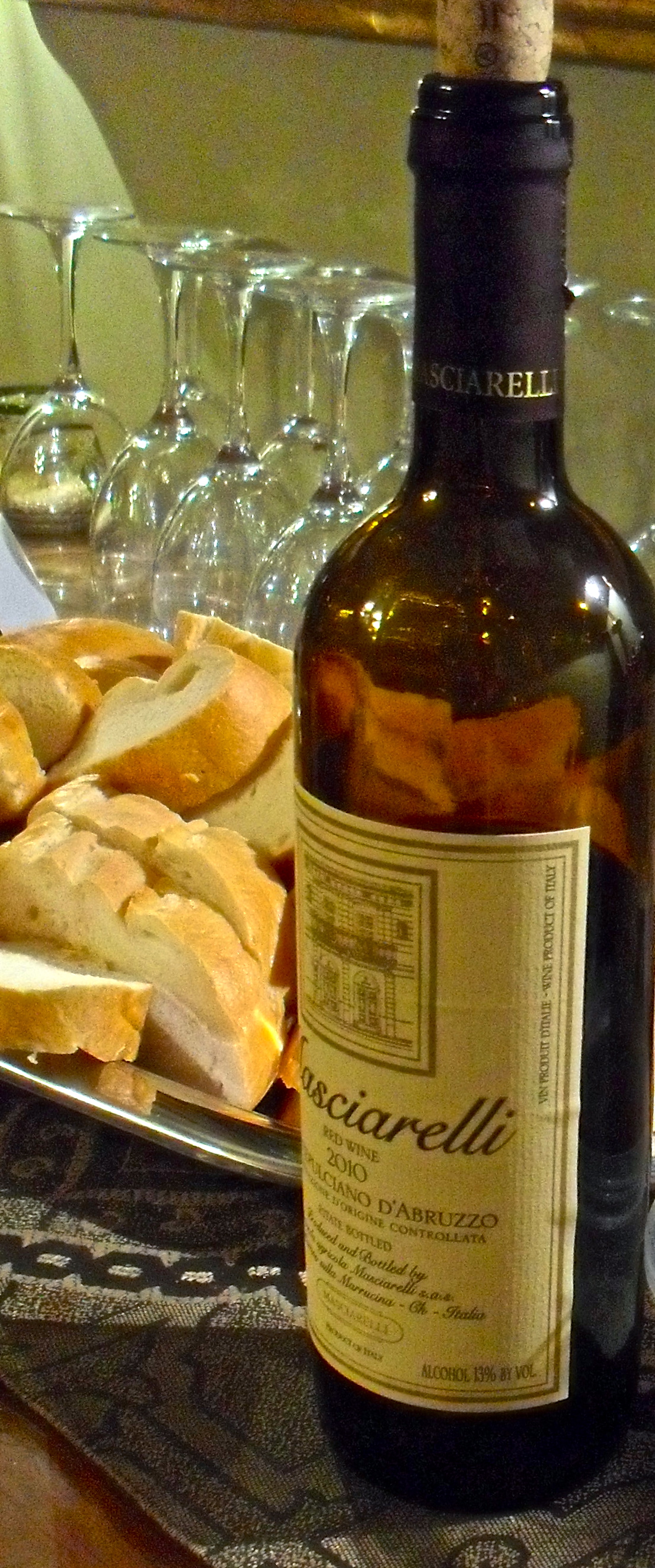
The tangy antipasto dishes were a nice, salty start to our dinner party, and the wine started flowing.

The oxtail ragu was outstanding, and its aroma reminded me of walking through Trastevere in Rome on Sunday mornings. Its perfume filled the streets as it simmered in neighborhood family kitchens.

The chicken dish was a family recipe passed down from the Italian aunties of one of the members, and was drenched in a garlicky, lemony marinade accented with olives and herbs.

Porcini mushrooms created a rich, sweet, and earthy flavor in the fresh ravioli, which was dressed simply in olive oil, fresh thyme, and pepper.

The roasted vegetable lasagna was made with layers of home made pasta, caramelized squash, and other earthy vegetables surrounded in a velvety bechamel sauce.

Blood oranges appeared in both the salad and later on the dessert fruit platter.  A real hit was a sweet and smooth lemon ricotta, which can be described as tasting somewhere between cheesecake and fresh milk heaven.   (I ran out and picked up a wedge today.  Fabulous stuff.)

If you want any of the recipes for these dishes, please contact OTK for copies of them from the meet up members.

Buon appetito a tutti!

Mangia con noi!

Photos by MELorden
Move Over Edward Scissorhands

Leave a comment

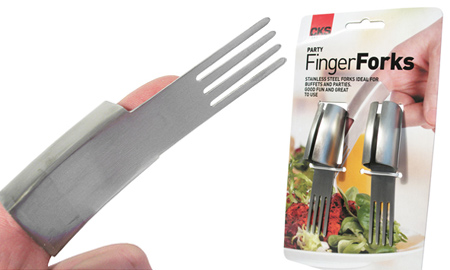
HERE COMES THE FINGERFORK

fork07

Billed as a new “party fork,” this wearable utensil ought to get the party started. You’ll avoid sticky fingers and dropped cutlery as you efficiently skewer shrimp or veggies for dipping.  No mess and no waste of plastic forks with this wolverine styled picker-upper.

Made of stainless steel and guaranteed to bring some fun to the party, this finger fork will  be a real hit at a buffett, picnic, or party. One size fits all as the Finger Fork is adjustable, and this  technology can be helpful to individuals with compromised hand and finger mobility.  But beware of double dipping.

With the product, you no longer need to fear embarrassing slipping while dipping or avoid shaking hands with greasy fingers from the finger food.  It should only be a matter of time before this piece of wearable silverware is joined by a “digital” spoon and knife.   –-MELorden

Dining With Da Vinci

4 Comments

leonardo-da-vinci-self-portrait-detail

DINING WITH DA VINCI

by MELorden

110807_davinci

We are all familiar with the notebooks of Leonardo Da Vinci. Not only was he fascinated with drawing plants, he may have preferred eating them.

For its time, to be a vegetarian was somewhat uncommon as well as controversial. It was said that Da Vinci was such a lover of animals that he often strolled through the bird markets, purchased the caged creatures, and promptly set them free. Da Vinci’s vegetarianism may have been the result of his contact with travelers like Greek humanists and painters from the East who came to Renaissance Florence and Milan.

There are records of what he consumed in the courts of popes and patrons.  He ate greens, fruits, mushrooms, pasta and cereals, and all manner of vegetables.  In particular, a hot chickpea minestrawas a favorite. This recipe is found in one of the first cookbooks of the Renaissance entitled Platina de honest volupatate (1475) written by Bartolomeo di Sacci (Batali in Fedele, The Artist’sPalate). Among Da Vinci’s library books was a 1487 copy.  The authentic chickpea recipe follows:

La Minestra (Luis in Cecere Rubeo) from Platina    

Screen Shot 2013-01-29 at 2.30.37 PMWash a pound or more of chickpeas in hot water.  After being washed they should be put in a pot to simmer without water.  With your hands mix half an ounce of meal, a little oil and salt, and twenty grains of coarsely ground pepper and ground cinnamon, and then put this near the hearth with three measures of water, and add sage, rosemary, and chopped parsley roots. Let this boil so that it is reduced to eight saucers full.  When it is nearly cooked, drop in a little oil; but if it is juice for sick persons, only add a little oil and spices. (Platina in DeWitt, Da Vinci’s Kitchen)

Who is to know what amount was contained in Platina’s saucer, or in a measure of water?  And the meal required for mixing is unknown, though some scholars believe that Da Vinci was familiar with corn meal (maize) which had been introduced to Italy around 1494 by the brother of Ludivico Sforza, the great Duke of Milan and patron of Leonardo Da Vinci.  Dave DeWitt, in his book Da Vinci’s Kitchen (2006) makes note of shopping lists Leonardo made (while working on The Last Supper) which include red and white maize– quite remarkable considering the recent return of Columbus from the New World. Some research suggests that corn was already being cultivated in Africa. Is there a connection here between Da Vinci and Lombardy’s polenta-centric diet?

rom37

While the great Leonardo invented a heat propelled spit for turning meat as well as a meat smoker and sausage grinder, he was a confirmed vegetarian, though he may not have been one in his early life. This rejection of meat in later life is referred to by a courtier in a letter to the Medici as somewhat heretical.  Da Vinci was recognized as odd in his desire to avoid hurting any living thing let alone feast on anything that had blood coursing through its veins (DeWitt).  In the true spirit of Renaissance humanism, his respect for life seems to have informed his diet–  though one wonders if he simply lost his taste for flesh after all those cadavers he dissected.

Screen Shot 2013-01-29 at 2.45.46 PMIn his notebooks, Leonardo delights in the vast and infinite variety of simple vegetarian foodstuffs and the endless manner in which they can be combined as shown in the recipes of Platina.  There are recipes in Da Vinci’s notes for a bright and herby salad dressing with spearmint, parsley, and thyme as an excellent dressing over a salad of fennel and bitter greens. He makes reference to anise cookies and light suppers of egg tarts.

For his students, Leonardo advocated a well-ordered life and a diet of moderation.  In a poem he summarizes his principles for culinary happiness:

If you be healthy, heed this advice,

Eat only when hungry, and let light fare suffice.

Chew all your food well, and this rule always follow.

Well-cooked and simple, be all that you swallow.

On leaving a table, a good posture keep,

And after you luncheon, do not yield to sleep.

Let little and often be your rule for wine,

But not between meals or when ready to dine.      –L. Da Vinci

Stand up straight, don’t be a glutton, and remember– you are what you eat.   Here, Da Vinci suggests all things in moderation, especially when it comes to food.  Sounds like reasonable advice for feeding body and soul from the world’s ultimate Renaissance dude.

(For more information about Da Vinci and the diet of the Renaissance:       What Did Leonardo Da Vinci Eat?)


Can Eating Apples Chase Away the Blues?

Leave a comment

More fruits and vegetables in your diet may mean increased happiness and a sense of well-being. Apples, in particular are now being hailed as an excellent means for fighting depression, according to a British study that was described in a journal of health psychology this month.

variety of fruit and vegetables

Nearly 300 people participated in a three week diet in which they made journal entries describing their emotional and physical state as well as  what they had eaten that day.  The number of servings of fruits and vegetables were recorded as well.

“The results showed a strong day-to-day relationship between more positive mood and higher fruit and vegetable consumption, but not other foods,” said the study. Increased feelings of  happiness, calmness, and energy were also recorded.  For improved benefits of mood, the researchers concluded that 7-8 half cup servings of fruits and vegetables would be required for improved positive feelings, which  can be achieved by making at least half of each meal fruits and vegetables. Also, by making fruit the focus of snacks, the desired number of servings can be reached.

Do healthy moods equal healthy snacks?  The research suggests that there is a relationship between them. For a sense of well-being and feeling positive, remember that an apple a day may, indeed, keep the doctor and the blues away.             –MELorden

For more information on related research, go to: Fruits and Vegetables: Seven-A-Day for Happiness and Mental Health

couple-eating-apple-750075

Steak Diane

1 Comment
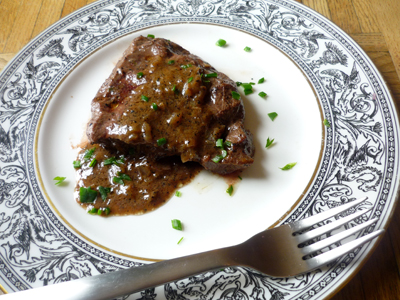
Tina Rosser  shared  this humorous essay  with OTK last week.  I thought you would enjoy it, along with a copy of Pierre Franey’s recipe for Steak Diane.             –MELorden

STEAK DIANE:  An Elusive Recipe

by Tina Rosser

a-koenig-diane

For years I’ve craved a good steak Diane.  What, you may ask, is Steak Diane?  Well, if you know what it is then you are well past your Use By date, but for the rest of you young ‘uns, Steak Diane is a mighty fine piece of meat pounded into oblivion and then sautéed quickly with butter, chives, cognac and a couple of other ingredients.  It was a big deal in restaurants back in the 40’s and 50’s but is now next to impossible to find on any menu.  And if you happen upon a willing chef, the version you’ll get will probably be nothing like what was being served way back when.

I first sampled Steak Diane in a restaurant outside Baltimore somewhere around 1973 or so.  Wealthy boyfriend’s parents were in town which was the only reason I got near that particular restaurant. Since that singular tasting is what I measure all Steak Dianes against, perhaps I too, like those willing chefs, am all wet when it comes to how this dish is supposed to taste.  For years after that one sublime tasting, I searched for a good restaurant Steak Diane.  Sometimes it would appear on a menu and often it seemed that the chef just took a not so fine piece of meat and smothered it in a mixture of A-One Sauce and Worcestershire Sauce.  Not okay.  Once or twice I happened upon a chef who was willing to knock out his version of the dish at which point I would have to swoon and greatly appreciate something that may have been good but was NOT Steak Diane.

Then, during a dalliance with the Book of the Month Club (remember them?), I stumbled upon Pierre Franey’s 60-Minute Gourmet cookbook.  And lo….there it was…a recipe for Steak Diane.  So one evening I decided to try out this recipe and after getting a boatload of flak from the butcher for asking him to pound thin a lovely filet, I managed to gather the rest of the ingredients and whattayaknow!  Presto Change-o! Voila!  Steak Diane as I remembered it!

tumblr_lohbedhw8s1qkkjz3

Fast forward about thirty years (where did the time go???) and here I am ensconced in my little Upper West Side apartment with a kitchen the size of a stick of butter and one cold winter night I get this bee in my bonnet about recreating that Pierre Franey recipe.  When I moved here from Connecticut, I brought along six cookbooks….Julia didn’t make the cut, but Pierre did.  So I hauled out the book and went off looking for the ingredients.  And what did I discover about New York City?  Butchers are rare!!!!!  I went to the Korean market….all the fish you could ever eat….I went to Zabar’s…ditto on the fish along with orange juice to die for…..but not a butcher to be seen.  So,  home I trudged with my shallots and chives and boullion and imported mustard and little tiny bottle of cognac, and after stopping at a Mickey D’s to drown my sorrows in a truly predictable burger and fries (oh hush up….you’re going to tell me you never go slumming at Mickey D’s???) I put all my ingredients away with the intention of finding that steak in the next day or so.

COU0010203But things happen.  Dinner with a friend, a jaunt to Connecticut, a birthday dinner, another dinner with a friend or the kids, and on and on.  So now I have shriveled parsley and chives and a mushy shallot.  The cognac even went into a tea concoction to battle a cold.

Another week goes by.  The temps are hovering in the sub-zero range and I decide I’m required to go out and walk for an hour after which I’m going to run into Fairway and get a nice little roasted bird which I will slice up and throw into a giant dinner salad.  And as I’m walking along in Riverside Park getting frozen to death, that Steak Diane recipe hops into my frontal lobe and knocks out the chicken and salad.  Into Fairway I go and gather up all the ingredients.  My last stop is the butcher who nearly has a coronary when I ask him to pound a beef filet down to about a quarter inch thickness.  I escape the judgement of the Fairway staff, run into a liquor store for a wee bit of cognac and get home where I roll up my sleeves and prepare everything exactly to Pierre’s specifications. Sort of.

It was good.  Pounding that filet sure makes it easy to cook.  Sort of like a fish fillet.  Two minutes a side and it’s perfect.  But it still wasn’t the Steak Diane I remember…..now elevated to epic status and perhaps not remotely achievable.  I did mess with Pierre’s ingredients a bit.  I had half the steak called for in the recipe but used the full amount of oil and butter, parsley and chives.  I went a little shorter on the boullion, cognac, mustard and Worcestershire. With a baked potato (smothered in more butter) and a lovely salad it made for a great dinner.  And I probably would have considered it perfect if not for the memory of that Steak Diane I had so long ago in a restaurant in Baltimore.

So what’s next?  I’m going to keep trying until I get it right.  A little less oil, a little more cognac, more shallots and less chives?  Whatever it takes.  And the perk?  I have a terrific recipe for steak that will thrill all my carnivorous family and friends none of whom are looking for the elusive Steak Diane that I will continue to attempt.  So they win, Pierre gets a workout, and maybe, just maybe, someday soon I’ll get it right.

RECIPE  FOR  STEAK DIANE  (from Pierre Franey, 60 Minute Gourmet)

INGREDIENTS

4 filet mignon, about 6 ounces each; or 4 boneless sirloins

salt and pepper

2 T olive oil

3 T butter

3 T chopped chives OR shallots

2 T cognac

3 T chopped parsley

1 teas. imported mustard

1/2 teas. Worcestershire sauce

2 teas. fresh or canned broth, preferably beef although chicken can be used.

DIRECTIONS

Pound meat to 1/4″ thickness.  Sprinkle both sides with salt and pepper.

Heat 2 T of oil and 2 T of butter in a large skillet and when very hot, add two of the steaks.  1-1/2 minutes on one side, 30 seconds on the other (not long enough for my tastes).  Transfer to a hot serving dish and then do the other two.

Remove skillet from heat and add the chives.  Return skillet to stove and cook about 10 seconds.  Add the cognac and stir.  Add parsley, mustard and Worcestershire.  Add the broth and stir.  Swirl in remaining butter.  Sprinkle the steaks with s and p and pour the sauce over them.

(For more about the history and technique of preparing this dish:   STEAK DIANE: LOST FOODS OF NEW YORK)

OTK Issue #3: Coming Attractions

Leave a comment

Art and Food: The Connection Explored

Meetup Party Photos: Our Italian Feast

Plus Recipes!  

Eating Italy in Six Courses

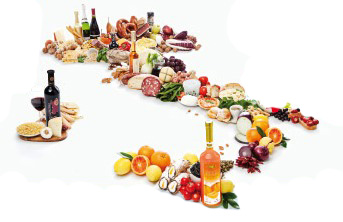
mapping-italy1

Good Books for Cooks:  

New Orleans Classics series by Kit Wohl

Adventures in Food History:   Da Vinci’s Renaissance Cuisine

Steak Diane:  An Elusive Recipe by Tina Rosser

Can Eating Apples Chase Away the Blues?

Food and Wine Meetup Group Will Party on Sunday

Leave a comment

antipastoFifiteen members of my Food and Wine meetup group are eating their way through Italy Sunday.  The six course meal is in the works and includes , artisan cheeses and antipasti, home made pasta dishes, saltimbocca, braciolone, insalata Siciliana, assorted dolci, torte, and cannoli, and more.  Wine selection will be a surprise.

Visit OTK on Monday for a look at the landscape of Italian food and drink that we consumed.  Mangiamo bene!

528886_10151964213985051_789453892_n

Museums of Food History and Exhibits

Leave a comment

Screen Shot 2013-01-25 at 8.59.53 AMScreen Shot 2013-01-25 at 8.59.41 AM

Screen Shot 2013-01-23 at 7.52.37 PMScreen Shot 2013-01-25 at 9.06.12 AM

Located in New Orleans, LA on the Riverwalk.

Screen Shot 2013-01-25 at 9.11.29 AMScreen Shot 2013-01-25 at 9.13.15 AMScreen Shot 2013-01-25 at 9.15.44 AM

Take a journey around the world and through time. Stroll through an ancient market, cook a virtual meal, peek inside the dining rooms of illustrious individuals—and consider some of the most challenging issues of our time. 
Visit Their Working Kitchen:  Live programming in the exhibition kitchen—a first for the Museum!—will animate the experience of food and flavor for visitors.

http://www.amnh.org/exhibitions/current-exhibitions/our-global-kitchen-food-nature-culture